

























































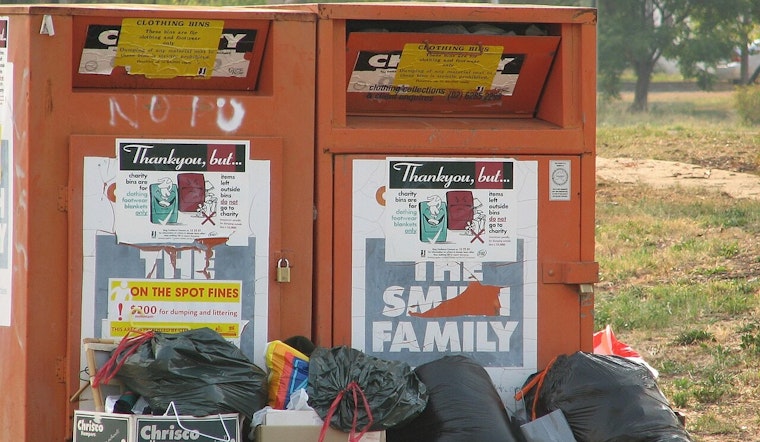
Those big metal clothing donation bins scattered around Portland are built for charity, but a growing body of reporting and research says they can also be deadly. More than 30 publicly documented cases across North America involve people who died while reaching into the chute or drawer of an unstaffed donation box to get at what was inside.
Report and local broadcast
The death toll was brought back into focus on OPB’s Think Out Loud, which recently interviewed Portland State professor Paul Collins about a long feature in The Believer that tracks those cases one by one. OPB notes that Portland’s relationship with donation bins stretches back decades, and by 1960 the city already had more than 70 Goodwill boxes collecting tens of thousands of donated bags each year. Many of the people who later died in similar bins across the continent were experiencing homelessness.
How the bins can kill
Forensic researchers say these are not freak accidents. Certain designs, especially mailbox-style chutes and rolling drawers, can create tight pinch points that trap arms or shoulders and force the body into a position that crushes the chest or neck. That can cause asphyxia or fatal crush injuries. A 2020 review in Academic Forensic Pathology detailed multiple Canadian deaths where the chute mechanism was central to how people died and urged changes in how bins are designed and placed. Investigators also warn that some of these fatalities likely get folded into broader cause-of-death statistics, which means the public tally almost certainly undercounts the real number.
Lessons from Canada
When clusters of bin deaths in Canada drew national attention in 2018 and 2019, manufacturer Rangeview halted new production and worked with charities to retrofit existing boxes. At the same time, some municipalities sealed or removed bins from sidewalks and parking lots. Reporting at the time described Rangeview advising charities to take out internal metal bars and retrofit containers so they would have fewer pinch points, and at least one large charity moved to upgrade thousands of boxes, according to The Canadian Press.
Regulation and enforcement
In the United States, local rules are all over the map. Some towns require permits, clear ownership labels and advance site approval before a box can be dropped on a corner. Other cities have no specific rules at all for privately operated clothing bins. New York City’s 2014 crackdown, which followed a spike in complaints and thousands of flagged containers, showed how aggressive enforcement and a tighter permit system can quickly cut down on rogue boxes, as Observer reporting documented. Across jurisdictions, tools like municipal permitting, visible ownership information and liability requirements are used to limit hazards from unregulated bins.
What donors and Portlanders can do
For Portlanders who want to help without adding to the risk, safety advocates suggest donating at staffed thrift stores or store-based drop-off bays rather than at unstaffed metal boxes in parking lots. Many charities spell out exactly what they accept and how staffed drop-offs work. For instance, Goodwill explains how donations are processed at attended locations. Consumer-protection coverage has also warned donors to watch for fake or unlicensed bins that hide who actually benefits from the clothing inside, with CBS New York outlining basic tips to avoid being misled.
Why the tally matters for public safety
Advocates argue that each bin-related death reflects broader failures around housing and shelter access, and that no amount of theft prevention should come at the cost of a person’s life. They say safer design, better siting and clearer local oversight could sharply cut the number of preventable fatalities. The known case count is widely believed to be an undercount, and both local governments and charities face growing pressure to weigh how they secure donations against basic human safety. As OPB noted, Portland’s long history with donation boxes means those choices are not abstract policy questions, they are very much a neighborhood issue.





