

























































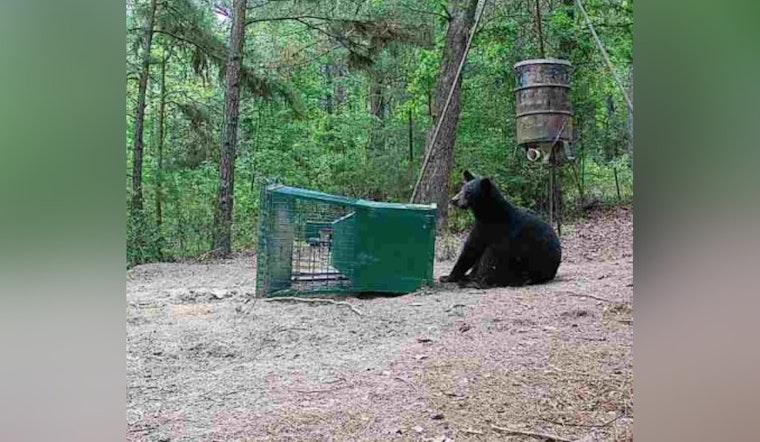
East Texas has a wandering heavyweight back on the move. A black bear that state biologists have been tracking since July 2025 has resurfaced across the region, wildlife officials said Thursday, after becoming the first documented black bear to overwinter in East Texas in more than 50 years. Biologists say they will keep watching his movements closely as spring draws more people outdoors.
He’s baaaack! 🐻
— Texas Parks & Wildlife (@tpwdnews) April 16, 2026
The American black bear we’ve been following since July 2025 has reemerged and is making his rounds again in #etx.
This is the first documented black bear to overwinter in East Texas in over 50 years!
Report bear sightings: https://t.co/NgFClb49t2
Tracking and timeline
According to Texas Parks & Wildlife, agency staff have been following the American black bear since July 2025, and he has started roaming again across the Piney Woods. Biologists have been monitoring him remotely and are asking the public to report any sightings through official channels. Officials are keeping the precise location under wraps to cut down on potential human-bear conflicts and to give the bear some breathing room.
Why this matters
The extended overwintering in one area is notable because East Texas lost its resident bear populations in the mid-20th century, making this return a standout moment for researchers and land managers. Texas Parks & Wildlife Magazine has chronicled the slow, decades-long recolonization of Texas by black bears, while local reporting has found that confirmed sightings in East Texas have remained sporadic in recent years. Wildlife biologists caution that a single bear overwintering does not automatically mean a breeding population has taken hold, but it does sharpen the focus on habitat, food sources and outreach to nearby residents.
How to stay safe and report sightings
State officials are reminding residents to do the basics to avoid unwanted bear encounters: secure trash, bring in bird feeders at night and store pet food indoors so it does not become an easy meal. Texas Parks & Wildlife shares safety tips and contact information, including a hotline (512-389-4800 or 1-800-792-1112) for reporting immediate encounters or signs of the bear. If a bear appears to pose an immediate threat, people are urged to call local law enforcement and follow Texas Parks & Wildlife guidance to reduce risks for both residents and the animal.



