

























































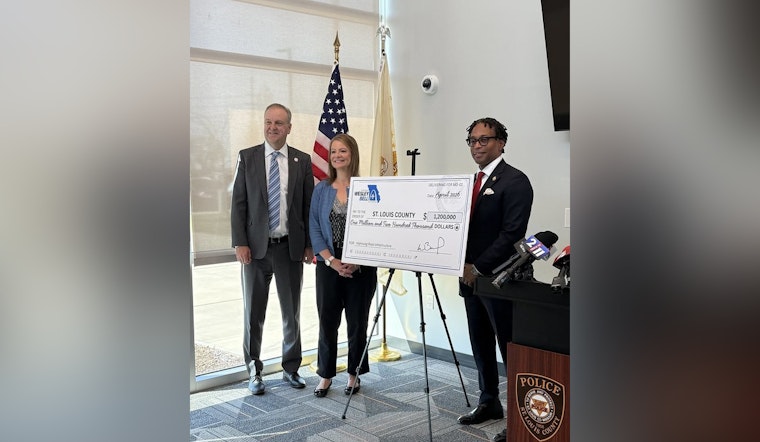
St. Louis County is getting ready to flip the switch on Operation SmartStreet, a new traffic tech push that aims to smooth out commutes while keeping people walking and biking out of harm's way. Announced Wednesday, the program will outfit intersections with smarter traffic signals and upgraded roadside gear so buses and emergency vehicles can move through faster and signals can react in real time to whatever is happening on the street. County officials say the goal is to cut down on high-risk crashes and make bus arrivals feel a lot less like a guessing game.
What Officials Say the Program Will Do
County leaders describe Operation SmartStreet as a package of adaptive traffic-signal timing, transit signal priority and emergency-vehicle prioritization that is built to trim bus delays, speed up first responders and add extra layers of protection for people on foot and on bikes, according to St. Louis County. The county notes that real-time signal adjustments and roadside equipment upgrades are the core of the plan.
Federal Funding and Local Backing
The House Appropriations Committee’s fiscal year 2026 report calls out a $1.2 million transit infrastructure grant for "Operation SmartStreet," described as roadside and vehicle equipment upgrades for St. Louis County, according to Congress.gov. In the committee’s project table, the request appears under "Bell," and Rep. Wesley Bell’s member profile confirms he represents Missouri’s 1st District, per Congress.gov.
Why Signal Tech Matters
Federal guidance and transportation research point to the tools in Operation SmartStreet as proven ways to cut transit delays, improve reliability and deliver safety gains for people who are most exposed in traffic. The Federal Highway Administration details how transit signal priority and adaptive signal timing can improve corridor performance and keep buses running closer to schedule, according to FHWA. Peer-reviewed work has also linked transit signal priority deployments on some corridors with reductions in total crashes and angle crashes, according to Transportation Research Record.
The county’s Department of Transportation and Public Works is set to lead Operation SmartStreet and coordinate with transit providers and emergency services, the county’s announcement explains, according to St. Louis County. While the federal dollars identified in the appropriations report are earmarked for equipment, county engineers and field crews still have to map out which corridors get attention first, pick vendors and line up construction schedules before any traffic signals actually change on the street.
Together, the county’s rollout and the congressional funding listing mark the start of a planning phase rather than an overnight transformation. Residents, drivers and transit riders will be watching to see which routes make the cut and when installation work begins. Officials say the upgrades are intended to bring down high-risk crash numbers and make bus trips more dependable, but the project still has to clear the hurdles of design, procurement and scheduling before those promises show up in daily commutes.





