

























































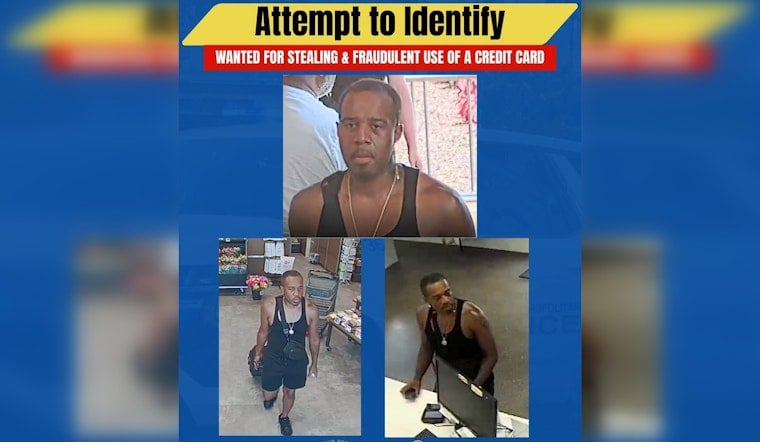
St. Louis police are asking the public to help identify a man suspected of stealing a woman's wallet from Washington University Medical Center and then going on a spending spree with her bank and credit cards. The theft happened between 2 p.m. and 3 p.m. on July 27 in the 500 block of South Euclid Avenue, according to police, and detectives have released security-camera photos of the suspect in hopes someone recognizes him.
The St. Louis Metropolitan Police Department says the man used the woman's stolen bank card and credit card to make several purchases after taking her wallet, as reported by First Alert 4. The theft took place at Washington University Medical Center, a sprawling campus in St. Louis's Central West End neighborhood anchored by Barnes-Jewish Hospital and Washington University School of Medicine, according to HUD USER. The area draws heavy pedestrian foot traffic tied to the medical facilities, creating distinct public-safety dynamics for the neighborhood.
A Campus With Layers of Security, Still Targeted
The medical center is not without its own security infrastructure. Washington University School of Medicine Protective Services runs a Joint Public Safety Center that coordinates 24/7 security patrols along South Euclid Avenue alongside hospital security officers, according to WashU Medicine. The surrounding neighborhood also benefits from the Central West End Neighborhood Security Initiative, a public-private partnership established in 2007 that funds supplemental off-duty police patrols and manages integrated security cameras throughout the area.
Despite that layered coverage, the case now falls to municipal detectives rather than campus security. The investigation is being handled by SLMPD District 5, headquartered at 1901 Penrose Street and responsible for police beats spanning both the Central West End and adjacent North St. Louis neighborhoods. A 2022 workload analysis by the Center for Policing Equity identified District 5 as one of the city's most understaffed and highest call-volume police districts, a factor that can affect how quickly detectives are able to run down leads like surveillance images.
How to Help Identify the Suspect
Anyone with information is encouraged to contact District 5 detectives at 314-444-0001. Tips can also be submitted anonymously through St. Louis Regional CrimeStoppers at 866-371-TIPS (8477), a 24-hour hotline that offers cash rewards for information leading to a felony arrest, according to the Ellisville Police Department.
What Charges Could the Suspect Face?
Missouri law treats the theft of the wallet and the alleged fraudulent card use as two distinct crimes with separate felony exposure. Simply stealing a credit card is designated a Class D felony under state law, punishable by up to seven years in prison, regardless of how much cash or value was in the wallet itself, according to Rose Legal Services.
Using a stolen card to make purchases carries its own penalty scale tied to dollar amounts. Under Missouri Revised Statutes Section 570.130, using a stolen credit or debit card is a Class A misdemeanor for fraudulent transactions under $750, punishable by up to a year in jail — but the charge escalates to a Class E felony carrying up to four years in prison if the total fraudulent transactions reach $750 or more within a 30-day span, per Rose Legal Services. The exact dollar total of the purchases allegedly made with the stolen cards has not been disclosed, leaving open which charge level the suspect would ultimately face if identified and arrested.
Despite this isolated incident, the Central West End has seen a long-term decline in overall crime. Total crime in the neighborhood dropped 28% between 2008 and 2024 following the rollout of coordinated neighborhood security initiatives, according to data published by the Central West End Neighborhood Security Initiative.



