

























































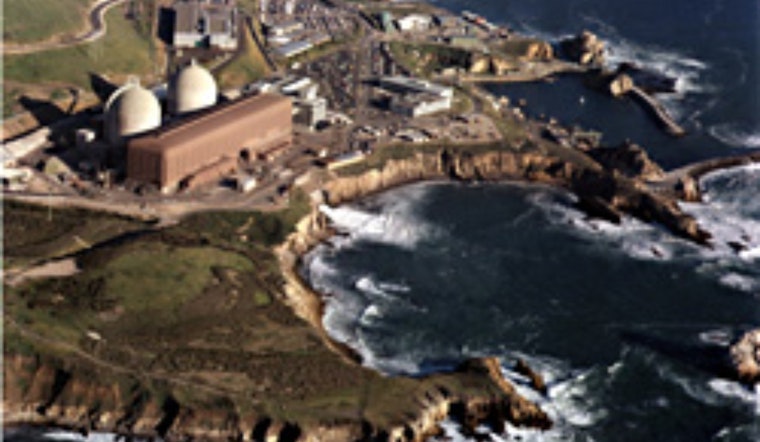
Diablo Canyon, California’s last remaining nuclear power plant, just cleared its final federal hurdle. Regulators renewed the plant’s operating license yesterday, setting it up to run for up to 20 more years even though state law keeps a hard stop at 2030, at least for now.
The move caps a multi‑year regulatory slog that revolved around water‑quality permits, coastal mitigation and seismic scrutiny. The two‑reactor complex supplies a sizable share of the state’s carbon‑free electricity, turning it into a political and environmental lightning rod. Federal officials have now signed off, but Sacramento still holds the real off switch.
Federal signoff and the license length
The Nuclear Regulatory Commission issued a 20‑year license renewal after an extensive safety and environmental review, according to the Nuclear Regulatory Commission. Agency officials signed the renewal paperwork at yesterday's ceremony after staff concluded the plant met the agency’s regulatory requirements.
The decision removes the last federal barrier and grants Diablo Canyon a full renewed operating term on the NRC’s books, even as California law still limits how long the plant can actually run.
State law still caps operations at 2030
California’s 2022 law, SB 846, authorized a limited extension to keep Diablo Canyon online while renewable energy and storage ramp up, but it explicitly caps the plant’s authorized operation at 2030 without new legislative action, the governor’s office said. Gov. Gavin Newsom’s office has framed the approvals as part of a strategy to hang on to a big block of carbon‑free, always‑available power during a bumpy grid transition, according to the Governor’s Office.
If the plant’s owners want to run Diablo Canyon beyond that state‑imposed date, lawmakers in Sacramento would have to step back in and change the law.
Regional water permit was the last state hurdle
The Central Coast Regional Water Quality Control Board adopted waste‑discharge requirements and an NPDES permit for Diablo Canyon on Feb. 26, clearing a key state environmental checkpoint that allowed the NRC to wrap up its review, according to the Central Coast Water Board. The board’s adoption documents spell out the public hearing record and the technical basis for discharge limits and monitoring.
The order also lays out a 30‑day petition window for the State Water Resources Control Board, a path critics are now using to challenge the permit.
Coastal Commission tied approval to land conservation
In December, the California Coastal Commission signed off on a coastal development permit and a federal consistency determination, but only with a sizable mitigation package attached. That deal includes roughly 12,000 acres of conservation commitments around the site.
Coastal Commission staff reports and correspondence describe proposed transfers and rights‑of‑first‑refusal for North Ranch, South Ranch and Wild Cherry Canyon, plus public‑access and stewardship funding as part of the mitigation package, according to Coastal Commission records. That land arrangement was central to the commission’s finding that the mitigation satisfied Coastal Act requirements for a limited extension of operations.
Legal challenges are already underway
Opponents are not waiting to see how long Diablo Canyon actually runs. The California Coastkeeper Alliance filed a petition on March 26 asking the State Water Resources Control Board to overturn the regional board’s discharge permit, arguing the agency failed to require technology that the Clean Water Act mandates, as reported by the Los Angeles Times.
The Central Coast board’s adoption documents spell out the petition process and timeline for seeking state review, and other groups have urged state officials to align any federal Clean Water Act certification with the state’s 2030 cutoff.
Why it matters for reliability and emissions
Supporters argue that keeping Diablo Canyon online helps California avoid power shortfalls during heat waves while preserving a steady block of zero‑carbon generation. The governor’s office noted that the plant produced roughly 10% of California’s electricity in 2024 and an even larger share of the state’s zero‑carbon supply, according to the Governor’s Office.
Critics counter that once‑through cooling damages marine life and that running a nuclear plant in an active seismic region raises long‑term safety and waste‑storage concerns. In other words, the approvals have left Californians weighing near‑term reliability and climate benefits against environmental impacts and community unease.
What happens next: legal petitions are likely to move through the State Water Board and potentially into the courts, while any operation past 2030 would require another round of legislative maneuvering. PG&E said the NRC decision underscores Diablo Canyon’s role in grid reliability and emissions reductions in a company statement released via PR Newswire, and local watchdog groups say they plan to keep pressing for strict enforcement and additional safeguards during the remaining years the plant is allowed to run.



