

























































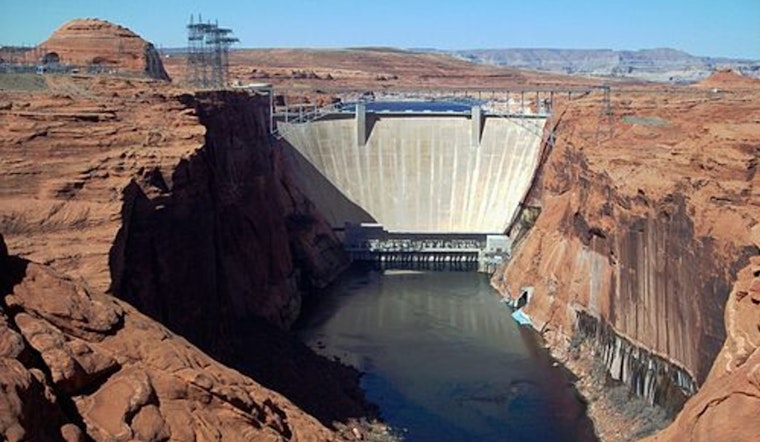
The U.S. Interior Department has ordered a huge pulse of water out of Flaming Gorge Reservoir, greenlighting the release of up to 1 million acre-feet to bolster a shrinking Lake Powell and keep hydropower and water deliveries across the West from faltering. The move comes as the Colorado River system sits at historically low storage and federal managers scramble to keep Glen Canyon Dam in working order.
According to FOX 13 News, Reclamation officials say the Flaming Gorge releases are part of a larger package that would add roughly 2.48 million acre-feet of water to Lake Powell. That includes up to 1 million acre-feet taken from Flaming Gorge and about 1.48 million acre-feet that otherwise would have flowed downstream to Lake Mead, an operation federal managers estimate would raise Powell by roughly 54 feet. Arizona water officials and the Central Arizona Project have warned that if the plan is fully carried out, it could begin in late April or early May and run into 2027, The Arizona Daily Star reported.
How the federal tools work
The Bureau of Reclamation is pulling two legal levers at once. One is the Drought Response Operations Agreement, or DROA, which allows upstream reservoirs to send extra water toward Lake Powell. The other is a 2024 interim-guidelines provision that lets Reclamation temporarily limit releases from Glen Canyon Dam. As Circle of Blue and Reclamation’s own DROA documentation explain, those tools can be used in tandem to move more water into Powell while simultaneously dialing back how much water is released downstream.
Flaming Gorge and local fallout
Flaming Gorge is one of the rare Upper Basin reservoirs that is still relatively flush, sitting at roughly 83 percent of capacity, or about 3.1 million acre-feet. That makes it the “low-hanging fruit” for emergency releases, but sending out as much as 1 million acre-feet is no small hit, and local businesses fear lower water levels could strand boats and cut into recreation revenue. Nearby Blue Mesa and Navajo reservoirs will not see releases under this action because their levels are already low, and Upper Basin officials say any DROA water sent downstream will be “fully recovered” once hydrology improves, according to WyoFile.
Downstream ripple: power and deliveries
Federal managers acknowledge the plan comes with trade-offs. Holding about 1.48 million acre-feet in Lake Powell instead of sending it on to Lake Mead would cut hydropower production at Mead and could reduce generation there by as much as 40 percent, with the largest impacts landing on Nevada, Arizona and California, officials said, according to Circle of Blue. Water managers in Arizona have emphasized that the strategy is aimed at protecting power generation at Glen Canyon and keeping water deliveries flowing, but it also raises the specter of deeper, longer-term cuts for lower-basin users, The Arizona Daily Star reports.
Timeline and what’s next
Reclamation says it is coordinating the operation with the basin states, Tribal Nations and Mexico, and that the fine print will be laid out in the agency’s monthly 24-Month Study. Several state officials have said releases could begin as soon as May 1. Upper Basin managers continue to stress that the Flaming Gorge releases are temporary and will be “fully recovered” once wetter conditions return, but experts caution that this maneuver delays rather than resolves the fundamental gap between the Colorado River’s supply and demand.
The federal move underscores how scant water and rising heat are forcing Western water managers into hard choices, propping up one major reservoir while putting other communities, recreation economies and hydropower operations at risk. With post-2026 operating rules for the river system still unsettled, most agree that more tough calls are likely before any long-term fix emerges.





