

























































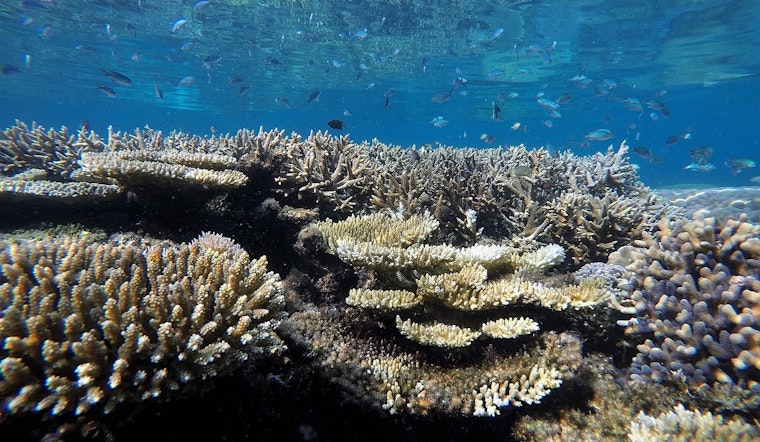
The University of Hawaiʻi has been tapped by the National Oceanic and Atmospheric Administration to serve as the Pacific Reef Research Coordination Institute, putting UH at the center of a new regional push to protect and restore coral reefs across the U.S. Pacific. The institute will coordinate research, monitoring, capacity building and outreach with partners in Hawaiʻi, American Samoa, Guam, the Northern Mariana Islands and nearby Freely Associated States. UH officials say the office will also prioritize training the next generation of conservation managers and researchers for the region.
According to a university announcement from the University of Hawaiʻi, the Pacific RRCI will be housed in UH’s Office of Land and Ocean Conservation Futures and will draw on researchers across UH Mānoa, UH Hilo and partner labs. “Many people worked many years to make this vision for collaborative reef research across the Pacific a reality,” Suzanne Case said in the release, underscoring how long the idea has been in the works.
Legislative Backdrop
By law, NOAA had to designate one reef research coordination institute for each basin after Congress reauthorized the Coral Reef Conservation Act through the Restoring Resilient Reefs Act of 2021 and folded it into broader federal legislation. The statute frames the RRCIs as vehicles to conduct federally directed research while supporting state, territorial and local managers along with Indigenous partners. See the bill text on Congress.gov for the law’s provisions.
How the Pacific RRCI Will Work
NOAA’s Coral Reef Conservation Program ran a competitive process that limited applicants to 32 previously designated coral reef research centers and required selection by technical merit and panel review. The agency’s funding notice allowed applicants to request up to $4.5 million per year for a five year cooperative agreement to support research, monitoring, capacity building and outreach across the basin. NOAA says the RRCI model is intended to connect federal science with on the ground management and community needs.
UH’s announcement notes that the Pacific RRCI will partner with island governments, Indigenous groups, federal agencies, NGOs and other academic centers to turn research into restoration and management practices and to build non federal capacity. The university said guidance will come from researchers at Kewalo Marine Laboratory, the Hawaiʻi Institute of Marine Biology, UH Hilo’s marine sciences program and the University of Guam’s marine lab. For full details see the University of Hawaiʻi announcement.
Local Work And Next Steps
UH’s recent projects offer a preview of the institute’s likely work. In February, UH researchers were tapped to lead a $4.6 million coral restoration effort in American Samoa that pairs heat tolerant corals with graduate training and local restoration positions. That project suggests the RRCI could help scale community driven restoration, monitoring and workforce programs across the U.S. Pacific jurisdictions. Read more about the American Samoa project at Hawaii News Now.
Lawmakers who backed the Restoring Resilient Reefs Act have said the package was designed to put more funding and technical tools in local hands and to expand NOAA’s coral program. Sponsors noted that dedicated funding for the RRCIs and related block grants will help amplify local stewardship. See a statement from Sen. Brian Schatz for background on the law’s aims.
Designation is only the first step. UH and its regional partners must now turn the new title into programs, staff and funded projects. For island communities that rely on reefs for food, shoreline protection and cultural life, the coming months and grant competitions will show whether the RRCI model delivers measurable gains in restoration, resilience and local capacity.





