

























































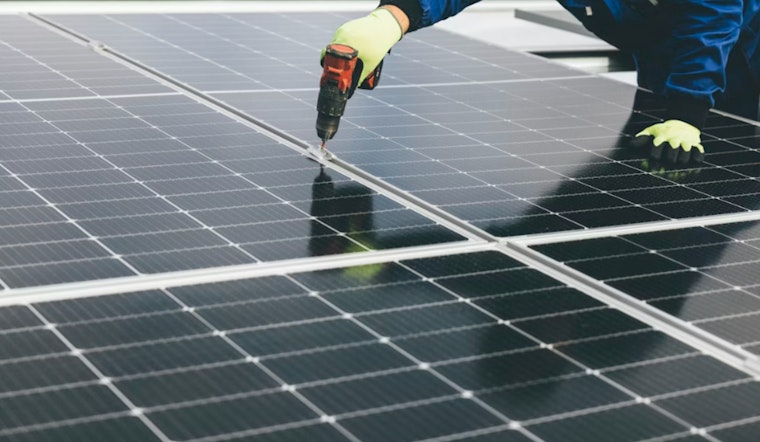
Nearly 200 advocacy groups are pushing Washington to return $350 million that had been set aside to equip 12,000 low-income Puerto Rican homes with rooftop solar panels and battery backups. The U.S. Department of Energy shifted the money to boost power generation and stabilize the island’s fragile grid, a move that has left families who depend on medical devices and refrigerated medicines wondering how they will keep the power on. Activists and residents say the decision raises the stakes ahead of hurricane season and deepens a long-running fight over Puerto Rico’s energy future.
Advocates Press Washington And San Juan
The coalition delivered a letter this week urging Gov. Jenniffer González-Colón and Energy Secretary Chris Wright to restore the $350 million and restart home installations, arguing the cash was specifically earmarked for residents who cannot afford private solar systems. “For them in particular, whether they get a (solar) system or not is something that is really life or death,” Charlotte Gossett Navarro of the Hispanic Federation told reporters. The nearly 200 signers include nonprofit installers and community groups that had been lined up to handle training and deployments, as reported by News4JAX.
How The Money Was Redirected
Department of Energy officials say the solar funds, part of the Puerto Rico Resilience Fund, were redirected to immediate grid repairs and generation work. The department announced a reallocation of up to $365 million to shore up reliability across the system. In its statement, the agency noted that the original award, made late in 2024, was designed to support rooftop solar and battery installations. Officials argued that stabilizing power generation would provide a faster benefit for residents across the island, according to the U.S. Department of Energy. Advocates counter that this choice leaves the most vulnerable households waiting for the very backup power the program was supposed to deliver.
Why Advocates Call The Cut Dangerous
Advocacy groups say the change in course effectively strands households that had already been vetted for help and, in some cases, had started home repairs needed to receive solar equipment. In a January statement, the Hispanic Federation said the decision “abandons families who depend on energy to power essential medical equipment to survive” and called for the funding to be restored. The group also warned that Congress had already set aside separate money for long-term grid reconstruction, while the $350 million in question was meant to be time-critical support for particularly vulnerable residents, according to the organization’s press release on the Hispanic Federation website.
Thousands Already In Motion, Others Stuck
Program partners say crews have already installed rooftop solar and battery systems on more than 6,000 Puerto Rican homes. They add that another 12,000 families had been approved or were in the pipeline when the federal reallocation landed. Residents who spoke with reporters described the loss of promised systems as an immediate hardship. María Pérez, an 80-year-old living on a fixed Social Security check, said she has had to keep refrigerated eyedrops literally “on ice,” while others reported relying on sleep-apnea machines, dialysis equipment or electric beds. Those accounts, along with the installation counts, were detailed in coverage by News4JAX.
Grid Problems And The Political Fight
All of this is unfolding against the backdrop of a power system that watchdogs have warned is in serious disrepair. U.S. fiscal overseers and utility officials have said the Puerto Rico Electric Power Authority’s restructuring and years of deferred maintenance mean the grid will need billions more to reach basic stability. Luma Energy, the private operator that manages transmission and distribution on the island, has estimated that the system will require as much as $25 billion through 2034 to rebuild and maintain service, while PREPA continues to wrestle with unresolved bankruptcy and creditor disputes, according to reporting by the AP. The fight over how to spend federal relief and resilience dollars has become a proxy battle over emergency fixes, long-term reconstruction and the politics that link Washington and San Juan.
What Officials Say And Next Steps
The Department of Energy says it is working with Governor González-Colón and Puerto Rican energy authorities to stabilize the grid and has stressed that it will prioritize power generation and critical facilities as it moves ahead. Federal materials state that the reallocated money will be managed through the Puerto Rico Resilience Fund, yet officials have not laid out a public timeline for which households will ultimately receive rooftop systems and when, according to the U.S. Department of Energy. Advocacy groups, for their part, say they plan to keep pressing both the White House and Congress to reverse the reallocation and restore the original program, which they argue remains the fastest way to protect medically vulnerable residents.
For now, families and installers are stuck in limbo. Some solar systems are already online, others have been frozen midstream, and the broader fight is expected to spill into legal challenges and congressional pressure campaigns in the weeks ahead. Whether Washington changes course or lawmakers intervene will determine whether Puerto Rico’s patchwork of community solar can grow quickly enough to shield the island’s most vulnerable households from another season of outages and storms.





