

























































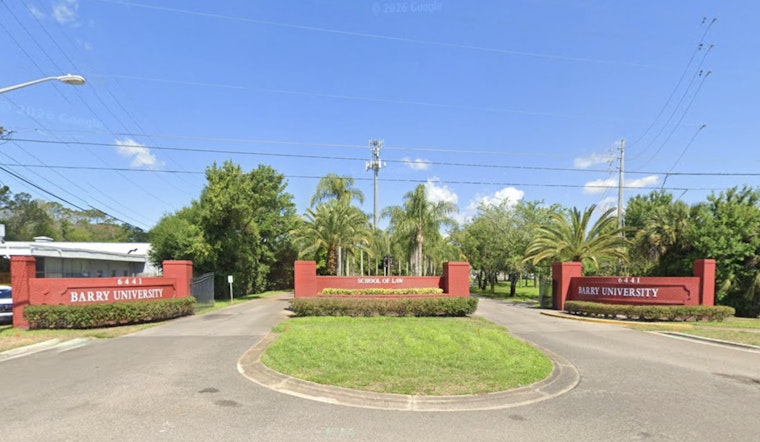
Florida Attorney General James Uthmeier on April 9 put Barry University School of Law on notice after students said they were blocked from starting a chapter of conservative group Turning Point USA. According to the students, the dean's office rejected their request for official recognition, arguing that TPUSA's national programming and tactics do not line up with the school's faith-based educational philosophy. That denial has quickly turned into a public fight over whether Barry's recognition rules cross the line into unlawful viewpoint discrimination.
Uthmeier’s warning
Posting on X, Uthmeier wrote, "This is wrong and could cause potential employers to question the quality of its graduates, and it may violate its obligations under Florida law," as reported by CBS12. He pointed to language in Barry Law's student handbook that affirms students' rights to freedom of expression and association. In his view, the apparent double standard in how the school recognizes student groups is serious enough to warrant attention from the state.
Students share the denial letter
The students who tried to launch the TPUSA chapter say the Office of the Dean sent them a formal denial, which they then shared with Turning Point USA. According to TPUSA, the letter described the group's "stated mission, national affiliation, and programmatic focus" as inconsistent with Barry University's Catholic and Adrian Dominican heritage. Student organizers told TPUSA that their plans focused on civic-style programming, including film screenings, structured legal debates and a voter registration drive, rather than protests or overt partisan campaigning.
How the dean’s office explained the denial
Materials the students shared with TPUSA indicate that the denial letter cited TPUSA's public-facing materials, including "activism kits and campaign-style engagement initiatives," as evidence that the national organization emphasizes a model of political advocacy and confrontation that the university sees as out of step with its educational philosophy. TPUSA reported that the letter suggested students consider joining other already approved student groups instead. The students maintain that the rejection turns more on TPUSA's national brand than on the specific events they proposed to host on campus.
Attorney general’s history with TPUSA disputes
Uthmeier's move fits a pattern from his office. In an October 2025 letter posted on the Florida Attorney General's website, he warned Suwannee County officials that refusing to allow a Turning Point USA chapter could violate the federal Equal Access Act and state nondiscrimination law, and he raised the possibility of enforcement action, according to the Office of the Attorney General. That letter cited 20 U.S.C. § 4071 and Florida authorities in outlining the legal concerns. Together, these interventions show the office has been tracking how schools across Florida handle proposed TPUSA chapters.
What the law says and where private schools fit in
The legal backdrop is complicated. In Christian Legal Society v. Martinez, the U.S. Supreme Court upheld an "all-comers" recognition policy at a public law school, ruling that viewpoint-neutral rules can survive constitutional challenge when applied consistently, as explained in the Supreme Court opinion. The Equal Access Act also governs access in some public-school forums, and the text of that law is collected at the Legal Information Institute. Private, faith-based institutions, however, often have more room to align recognition decisions with their religious missions. Whether Barry's decision would be found unlawful could depend on how the school actually applied its policies and what commitments the student handbook made to students.
What happens next
Uthmeier has warned that blocking TPUSA's formation could hurt Barry Law's reputation and even reflect on its graduates, a concern highlighted in local coverage by CBS12. TPUSA and the students who shared the denial letter have already pushed the dispute into the public arena, and the Attorney General's office has signaled it will watch how the school's policies are applied. For now, the fight turns on that denial letter and on the core question of how far a faith-based mission can go in shaping which student groups get official recognition.





