

























































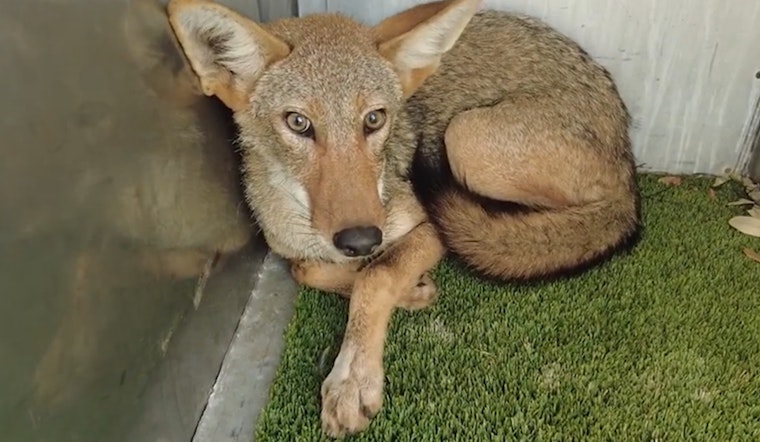
The Texas Department of Transportation has started posting wildlife‑crossing signs along Galveston Island after researchers and residents raised alarms about a local group of coyotes nicknamed “ghost wolves.” These canids carry fragments of the once‑widespread red wolf genome, and the new signs are meant to be a small, very visible attempt to cut down on road deaths while scientists continue genetic work that could influence how conservationists handle the endangered red wolf.
TxDOT puts up signs where roadkill has spiked
State transportation officials say they installed ten wildlife‑crossing signs along a 19‑mile stretch of FM 3005, working with researchers and Galveston County leaders to map where coyotes were being killed by vehicles from 2020 through 2025. The agency says the installations wrapped up in March. According to the Texas Department of Transportation, the goal is to reduce collisions and also to make drivers aware that the island’s canids are not your average coyotes.
What exactly are "ghost wolves"?
Researchers use the nickname “ghost wolves” for island canids that look a lot like coyotes but still carry measurable ancestry from the American red wolf, a species declared extinct in the wild during the 20th century. The Gulf Coast Canine Project, which has led fieldwork on Galveston and nearby coastlines, reports that genetic analyses have uncovered red‑wolf alleles in these animals and that some of those variants do not appear in the current captive red‑wolf population. That makes the Gulf Coast animals a potentially unique genetic reservoir.
One scientist involved in the genetic work has warned that hybrid labels can confuse more than they clarify, but also stressed how striking the results are, noting that “these animals…are carrying upwards of 30% of red wolf identified DNA.” That finding has pulled in fresh attention from conservation biologists and local volunteers. Local reporting has tied the story to samples and sightings on Galveston Island and in parts of southwest Louisiana.
From sequencing to cloning: the rescue ideas on the table
Conservation groups and at least one biotechnology company see possible hands‑on uses for ghost‑wolf genetics, including sequencing individual animals to pinpoint high‑value alleles and, in some proposals, weaving those alleles into the captive red‑wolf population to improve its genetic health. Colossal Biosciences has publicly outlined a multi‑phase plan that involves sequencing, cloning and gene editing. The company says the strategy could help create an insurance population and restore ancestral traits to the red wolf, an approach that has already drawn coverage as part of its broader de‑extinction work.
Plenty of people are not convinced. Commentators and some independent researchers argue that cloning or gene editing as a stand‑in for habitat protection raises ethical, ecological and scientific concerns, and they worry that splashy lab announcements can leap ahead of peer‑reviewed evidence. Opinion and analysis in outlets such as The Guardian have urged caution even as labs and local teams explore what a genetic “rescue” could look like.
Local stakes: roads, development and community action
On Galveston Island, the stakes are not abstract. Advocates point to rising roadway losses and worry that ongoing development could break up an already small island population. Local reporting notes that recorded coyote fatalities along FM 3005, recovered by researchers and advocates, climbed from single digits in 2020 to higher counts in later years. Some field teams estimate the island may support on the order of dozens to roughly a hundred canids at any given time.
Community groups have responded with town halls, school projects and support from local businesses, all aimed at getting residents to pay attention while researchers tag, collar and monitor the animals. Those researchers emphasize that protecting habitat and cutting human‑caused deaths are basic requirements for any ambitious conservation strategy, and that keeping the island population intact is what buys time to find out whether its genes can help a critically imperiled species. The Gulf Coast Canine Project continues to share field updates and to work with the public on coexistence strategies.
How this ties back to national recovery goals
The red wolf recovery program remains fragile. The U.S. Fish & Wildlife Service reported a February 2026 estimate of roughly 26 known and collared red wolves in the wild, with a total wild estimate of 27 to 28 animals, while SAFE captive programs hold several hundred individuals. Any plan to fold ghost‑wolf genetics into that recovery work would have to fit federal recovery rules and pass ethical and legal review, according to officials and conservation scientists.
For now, the new road signs along FM 3005 are a modest local move meant to buy time. Scientists and community advocates say that slowing vehicle strikes and guarding what habitat is left will let research continue and help determine whether Galveston’s mysterious canids remain a coastal curiosity or become a lifeline for the red wolf.



