

























































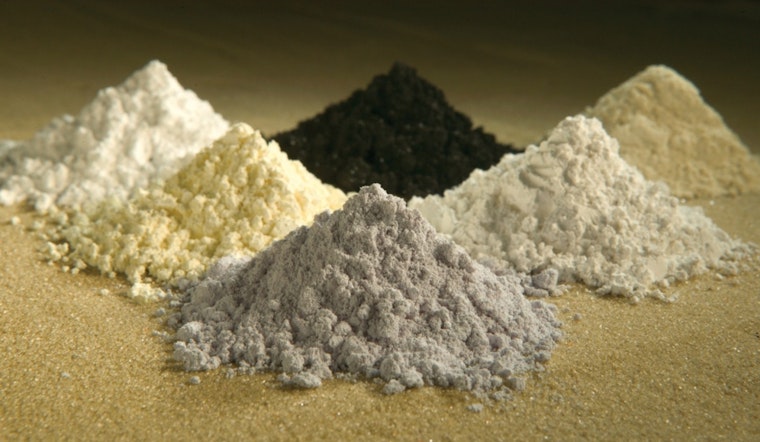
The U.S. Department of Energy has tapped two industrial corners of Louisiana and Oklahoma for a rare-earth experiment with big-money stakes. On Tuesday, the agency said it picked a pair of demonstration projects near Gramercy and in Ardmore for up to $134 million to pull rare earth elements out of industrial waste, instead of digging new mines. Officials cast the move as a nuts-and-bolts effort to build U.S. processing muscle for magnets and other tech that currently leans heavily on Chinese supply chains.
Louisiana plant near Gramercy will process alumina 'red mud'
According to StreetInsider, the Louisiana project would design, build and run a demonstration facility near the Gramercy alumina refinery to process bauxite "red mud" and separate rare earth oxides for refining into metals. The Mines and ElementUSA partnership is being pitched to produce roughly 150 to 1,000 metric tons of rare earths per year, and award negotiations with DOE include about $67 million for the effort, according to the release.
The statement also notes that ElementUSA holds rights to millions of tons of alumina tailings at the Atalco site, material that could turn from long-term headache into a homegrown feedstock if the process works at scale.
Oklahoma demonstration will test industrial-waste route with MIT
In its announcement, the Department of Energy said the Phoenix Tailings project in Ardmore will build a demonstration-scale facility to produce high-purity rare earth metals from industrial waste, teaming with the Massachusetts Institute of Technology on technical development. The awards fall under the agency's Rare Earth Elements Demonstration Facility Program, designed to show end-to-end extraction, separation and refining on domestic feedstocks. The selections are intended to carve out commercial pathways for heavy rare earths used in high-performance magnets.
Why it matters
Waste-based recovery is increasingly framed as a faster, lower-impact way to scale U.S. rare-earth processing than opening new mines, a point highlighted by reporting from New Orleans CityBusiness. Company filings also show the DOE selected USA Rare Earth for up to $19.3 million in May to advance pilot separations work, underlining a broader federal push to shore up domestic processing capacity; the company described that award in a May press filing.
Taken together, the projects are aimed at supplying elements such as neodymium, praseodymium, dysprosium and terbium for use in batteries, electric-vehicle motors and defense systems. It is a pretty clear signal that Washington wants less vulnerability in the supply chains behind everything from EVs to advanced weapons.
What is next
DOE stressed that selection starts negotiations rather than locking in checks. Award amounts could shift during that process, the Department of Energy said. Teams still have to hammer out budgets, secure permits and finish engineering plans before any commercial output appears, and regulators and local officials will be watching closely to see how tailings handling and environmental safeguards are handled.
Locally, the Gramercy tailings impoundments, described in the Mines release as containing millions of tons of residual material, could become a test case for turning an environmental liability into a domestic supply stream, the universities and partners argue. How quickly that happens will come down to negotiations, permitting and engineering timelines, but the selections already represent a notable federal bet on waste-to-value technology in the Gulf Coast and the Plains.




