

























































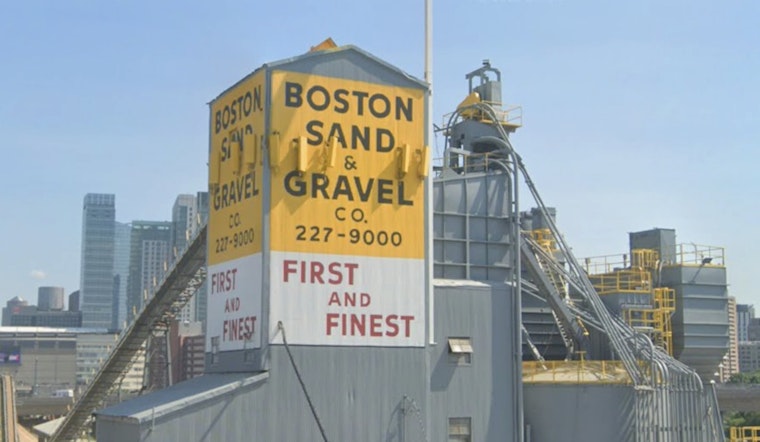
Boston Sand & Gravel has hauled the fight over Charlestown's waterfront into court, filing suit last Tuesday in Suffolk Superior Court to stop a 705-unit apartment project on the Austin Street parking lots off New Rutherford Avenue. In court papers, the long-running concrete supplier argues that dropping hundreds of new residents beside its plant access road would mix pedestrians and bike riders with heavy industrial truck traffic in ways that could lead to serious injuries or fatalities. The clash pits a century-old industrial operation against a city-backed housing push in one of Boston's tightest neighborhoods.
Lawsuit and safety claims
In its complaint, Boston Sand & Gravel argues the proposed layout would give residents "unlimited access" to a maintenance road used by its trucks and that collisions are "inevitable," according to The Boston Globe. The Globe reports the company is permitted up to 880 truck trips a day, with some vehicles weighing as much as 99,000 pounds. The filing asks the court to block developer Trinity Financial from moving ahead until safety concerns and easement rights tied to the access road are sorted out.
Neighbors raise alarms
Current users of the parking lots, including students and commuters, told reporters they are not thrilled about trading their spaces for apartments, citing dust, noise and safety worries, as reported by WBZ NewsRadio. WBZ notes some locals fear their cars will be "dinged up and scratched" by nearby truck traffic and reports that the complaint itself warns residents could face "severe injury and or death." The station also reports that Trinity has until Aug. 5 to formally answer the lawsuit.
Developer and city push back
Trinity Financial, tapped by the city to redevelop the Austin Street lots, says its design is meant to blunt those safety fears. The company says the plan turns buildings inward, separates residential driveways from industrial circulation routes and adds pedestrian upgrades and new plantings, according to reporting by the Boston Business Journal. The Boston Planning & Development Agency has already approved the master plan and the first phase of the project, and Trinity has told the city it will prepare a transportation access plan aimed at reducing conflicts with truck traffic, per BPDA filings.
What comes next
The core legal question is whether the master plan and site layout would unlawfully interfere with Boston Sand & Gravel's easement rights and whether engineering tweaks can truly fix what the company calls "entirely foreseeable" hazards, language drawn from its complaint and recounted by The Boston Globe. If a judge grants an injunction, construction could be put on ice. If the request is denied, city officials and Trinity say they will keep adjusting safety measures as the project moves through permitting and, ultimately, building.
Whichever way the court leans, the case is shaping up as a test of how Boston balances its urgent demand for new housing with the gritty industrial uses that still line the edges of many neighborhoods. For now, the fight over trucks, tenants and the future of the Austin Street lots will unfold both in Suffolk Superior Court and in public planning meetings, as residents, the company, the developer and city planners try to square safety with housing needs.





