

























































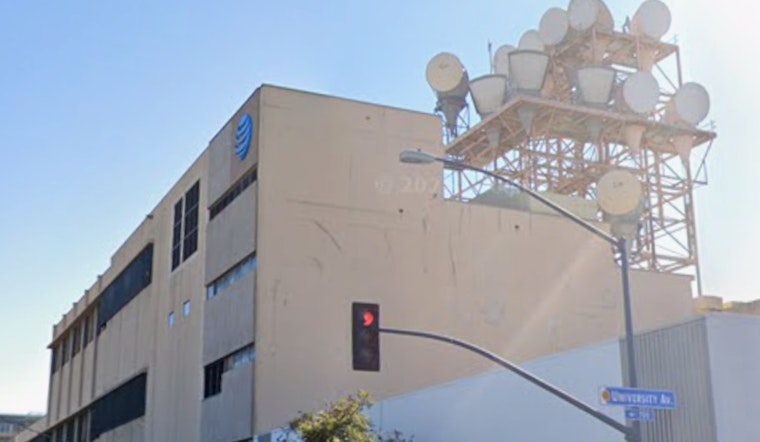
The rusting microwave tower that had long poked awkwardly out of Hillcrest's skyline is finally history. After crews stripped the visible bulk of decades-old radio dishes off the roof of AT&T's century-old central office, the most obvious eyesore is gone. What is left behind is a massive, technically complex building and a neighborhood wondering whether this block can ever realistically turn into housing or public space.
The tower came down, and why it mattered
As reported by Times of San Diego, crews spent about three months removing the microwave dishes and rooftop equipment. An AT&T spokesperson said the hardware "had reached the end of its useful life." With that cleanup, the company stripped away the most visible layer of radio gear that had accumulated over decades atop its central office, a site neighbors have quietly eyed for redevelopment for years.
A neighborhood plan already in place
The Hillcrest Focused Plan Amendment sketches out a future built around more housing near transit, safer and more walkable streets, and a neighborhood cultural district that highlights Hillcrest's LGBTQ+ history. The City of San Diego says the amendment grew out of dozens of public meetings and more than 1,600 written comments. It spells out the kinds of public spaces and street improvements that could bolster small businesses and shared community uses around sites like the AT&T block.
Why swapping an antenna for apartments will not be simple
That hopeful vision runs headfirst into the reality of central office buildings. They were engineered to handle extremely heavy switchgear, backup generators and dense bundles of cabling, so clearing or relocating all that hardware can be both expensive and technically tricky. The microwave "long lines" that once bounced signals from tower to tower across the country have mostly been replaced by underground fiber, which helps explain why rooftop dishes have been disappearing, according to WIRED. The building's role in the current network, though, is what makes any conversion a complicated proposition.
Neighbors, businesses and consultants weigh options
Local leaders and business owners say they would like to see housing that includes truly affordable units, ground-floor space tailored for small retailers and a public "sunken garden" where neighbors could gather. As reported by Times of San Diego, some nearby businesses have quietly brought in consultants to sketch out possibilities. Planning firms such as City Forward offer the kind of technical and community-planning expertise neighborhoods typically lean on for projects like this.
What comes next
For now, the land and building remain firmly in AT&T's hands. Any sale or conversion would require detailed decommissioning of equipment, environmental review and land-use approvals, all of which are anticipated in the Hillcrest plan framework. The City of San Diego process gives neighbors a formal voice in what happens next. Turning a century-old telecom bunker into homes and plazas, though, will take money, patient technical work and a willingness from a company that still relies on the site for core services.





