

























































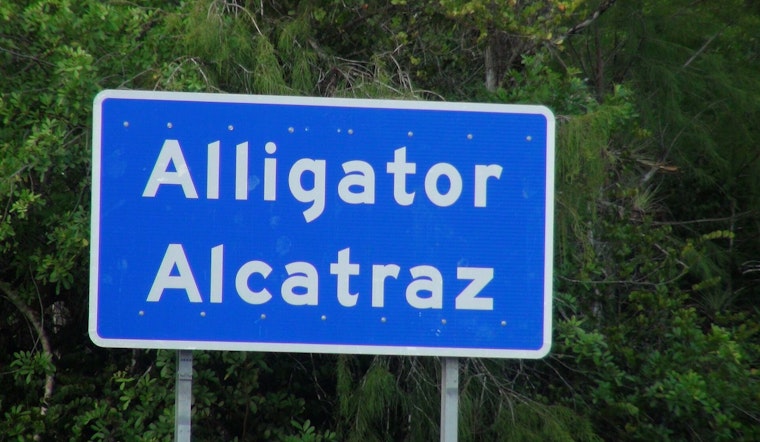
State and federal attorneys told a federal judge on Monday, April 13, 2026, that they are following a court order meant to open up legal access at the Everglades detention site known as “Alligator Alcatraz.” Lawyers for detainees pushed back hard, saying new filings show people held there were beaten and pepper-sprayed after their phone access was suddenly cut off, raising fresh alarms about conditions inside the remote facility. The clash grows out of a March 27 order that was supposed to guarantee confidential legal calls and easier, in-person attorney visits.
What the judge ordered
On March 27, 2026, U.S. District Judge Sheri Polster Chappell turned a temporary order into a preliminary injunction that requires officials to give detainees timely, free, confidential, unmonitored and unrecorded outgoing legal calls, plus at least one working telephone for every 25 people held at the site. The order also says attorneys must be allowed to visit during regular visiting hours without scheduling in advance, and that clear protocols have to be written down and posted in English, Spanish and Haitian Creole. The judge found those steps were necessary because evidence showed detainees did not have reliable, confidential ways to reach their lawyers, a problem the court said was especially serious at a temporary, high-turnover facility like the Everglades site, according to the U.S. District Court for the Middle District of Florida.
Officials say they’re complying
At a status conference on Monday, state and federal lawyers told Judge Chappell they are rolling out the required changes and revising policies so they line up with the injunction. Attorneys for the Florida Division of Emergency Management said the state is in the process of buying roughly 80 to 100 cell phones to expand outgoing call access for detainees. Government counsel also argued that a recent filing by the plaintiffs accusing officials of violating the order could have been resolved without dragging everyone back into court, according to the Miami Herald.
Allegations of retaliation after phone cutoff
Lawyers for detainees painted a starkly different picture, filing new notices that accuse guards of “physically assaulting and pepper-spraying detainees” after people inside the facility protested when phone access was abruptly shut down. The filings include what attorneys say is video-call footage showing a detainee with a black eye, along with declarations stating that another detainee suffered a broken wrist. Those allegations were detailed in the court papers described by the Miami Herald.
Why lawyers pushed for relief
During an earlier two-day hearing, plaintiffs argued that routine practices at the temporary South Florida site, including a requirement that attorneys pre-schedule visits and frequent transfers of detainees, effectively shut down meaningful access to counsel. In a 68-page opinion, the court noted that the facility, built at the Dade-Collier Training and Transition Airport, opened on July 3, 2025, has capacity for thousands of people, and held roughly 1,500 detainees in late January 2026. That scale, the judge wrote, made clear, posted protocols and adequate phone access all the more critical, according to the U.S. District Court for the Middle District of Florida.
Next steps and oversight
The court scheduled a Zoom status conference for April 13 to check on compliance and ordered that information about attorney visits be posted on both ICE and Florida Division of Emergency Management websites so lawyers and detainees can easily find the ground rules. Plaintiffs’ attorneys said they plan to watch implementation closely and reserved the right to return to court if the promised changes do not materialize, according to a docket summary from Justia Dockets & Filings.
Advocates’ reaction
Civil-rights advocates hailed the March ruling as a vital move, while warning that what happens on the ground is what really counts. “Access to legal counsel is a constitutional right, not a privilege,” an ACLU of Florida spokesperson said after the order, urging officials to make the court’s requirements both immediate and lasting, according to ACLU of Florida.





.jpg)