

























































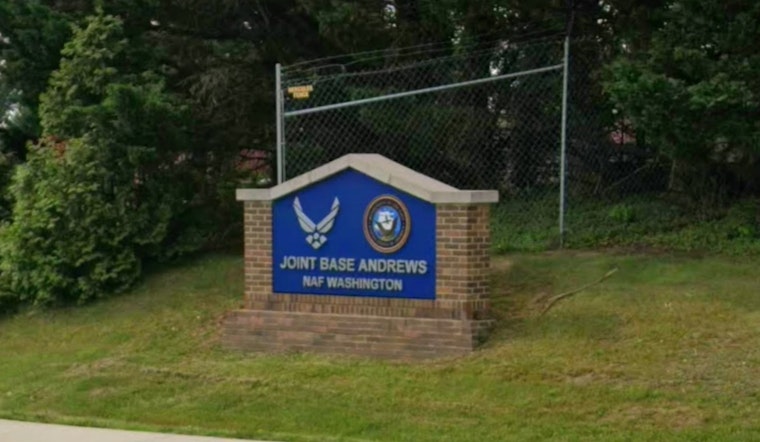
Maryland environmental regulators say roughly 32,000 gallons of jet fuel leaked out of a refueling system at Joint Base Andrews between January and March 2026, with part of that spill reaching Piscataway Creek, a tributary of the Potomac River. After the leak was discovered, officials shut down the affected fuel line and moved into an active on-site cleanup as state and federal teams work to corral the contamination.
The Maryland Department of the Environment is leading the investigation and has ordered the Air Force to carry out emergency soil sampling, drill monitoring wells and provide daily updates on how the cleanup is progressing, according to the Maryland Department of the Environment. State officials say crews were able to capture roughly 10,000 gallons of fuel before it reached the creek and are urging people and pets to steer clear of any areas where there is a visible petroleum sheen or a strong fuel odor.
Base: 22,000 Gallons; Agencies Notified
Joint Base Andrews has put forward a smaller estimate, saying about 22,000 gallons leaked, and reports that installation staff first spotted a visible sheen and smelled fuel on Piscataway Creek on March 23. In a base press release, leaders said they notified the Environmental Protection Agency, the National Response Center and state regulators, then isolated the leaking section of the refueling system while mitigation measures were rolled out, according to Joint Base Andrews.
Why The Totals Do Not Match
The gap between the state’s 32,000 gallon figure and the base’s 22,000 gallon estimate has caught the attention of regulators and local officials. A base spokesperson told WTOP that the discrepancy is tied to routine temperature-related volume changes and a faulty valve, and said the extra fuel credited to those fluctuations stayed inside the fueling system instead of being discharged into waterways.
Cleanup, Health And Water Safety
Contractor crews are on site removing contaminated soil and water and collecting samples while the state evaluates ecological damage. Officials say intake pipes for nearby public drinking water systems are located upstream, so there is no immediate threat to tap water, according to reporting by CBS Baltimore. Regulators warn that exposure to petroleum products can irritate skin, eyes and lungs, and they are advising people and pets to avoid affected stretches of Piscataway Creek until test results show conditions are safe.
Local Context
Piscataway Creek already has fish consumption advisories because of PFOS contamination, and residents say this latest spill adds to long-running worries about military-linked pollution in Prince George’s County, as reported by The Baltimore Banner. Joint Base Andrews also remains under federal oversight for legacy contamination, according to documentation from the EPA.
Regulatory Follow Up
State regulators have ordered that the affected segment of the base’s fueling system stay offline until all safety requirements are met and have required daily public updates on cleanup progress, per the Maryland Department of the Environment. The agency says it may pursue enforcement if the base is found to have violated its state oil permit or reporting obligations.
Officials say sampling and containment work will continue in the coming weeks as investigators track how far the fuel moved through soil and surface water. We will update this story when regulators release lab results or post the daily cleanup reports.





