

























































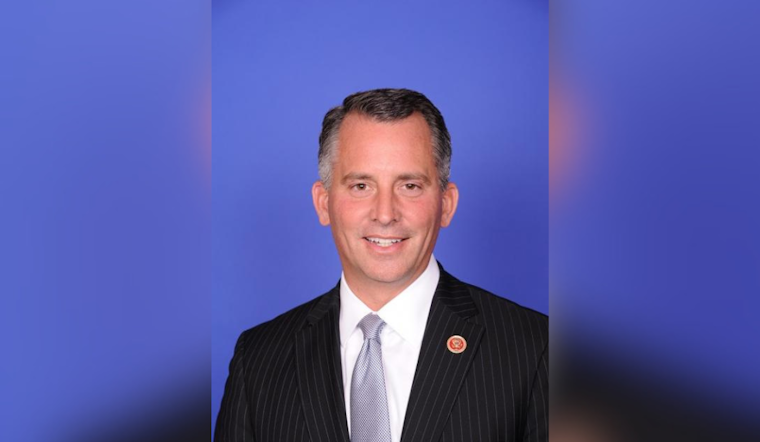
At a Tiger Bay Club luncheon at the Citrus Club in downtown Orlando on Friday, April 17, 2026, former U.S. Rep. David Jolly laid out a sweeping affordability agenda that would pull hurricane and wind coverage out of the private insurance market and launch a 10-year "renaissance" of public education. The one-time Republican, who registered as a Democrat in April 2025, framed the proposals as technocratic fixes to an affordability crisis he says is hollowing out Florida’s middle class. He argued the measures could both lower costs for homeowners and teachers and, not incidentally, reshape the political map ahead of the 2026 election.
According to the Orlando Sentinel, Jolly told the Tiger Bay crowd he would fully remove hurricane and wind coverage from the private market and place those perils into a state "sovereign" catastrophic fund. He said shifting storm risk into a state-backed vehicle could dramatically lower private homeowners' premiums, citing potential cuts in the 60-to-70 percent range, while leaving private carriers to cover non-storm perils. The Sentinel reported that he cast the idea as a long-term reinsurance strategy that Florida would gradually build up.
How the catastrophic fund would work
Jolly compared the concept to government-backed programs in health care, arguing that the state must step in when private markets fail and that a long-term fund could function as reinsurance for hurricane losses. Insurance analysts and consumer advocates, however, warned in local coverage that the plan could saddle the state with large liabilities or mirror problems seen in national insurance efforts. FOX 13 reported experts who cautioned that state-backed coverage comes with trade-offs and pointed to programs such as the National Flood Insurance Program as a cautionary example.
10-year education renaissance
On schools, Jolly pledged a decade-long push to repair failing infrastructure and fold services such as mental-health counseling and hunger programs into the public system. He proposed tapping tourist-development tax revenue to fund a roughly 30 percent pay raise for teachers over the life of the plan, a central promise of the education "renaissance" he described. Those proposals appear in material his campaign has circulated as part of its affordability and governance pitch; David Jolly's campaign lays out the broader platform and funding ideas he is promoting across the state.
Where this fits into the campaign
Jolly formalized his Democratic bid after registering as a Democrat in April 2025 and announcing his campaign in June 2025, a party switch that attracted attention as Democrats searched for a way back in Florida. WFSU and other outlets note that he has emphasized pragmatic affordability fixes rather than culture-war flashpoints during recent campaign stops. At Tiger Bay, he argued that a Democratic win in 2026 could set the road to the White House in 2028, pitching Florida as the state that could flip national momentum.
Opposition and what comes next
Jolly faces a crowded GOP field, including U.S. Rep. Byron Donalds and former House Speaker Paul Renner, who are emphasizing private-market fixes and different approaches to both insurance and schools. Rep. Donalds’ entry into the race drew national attention, as reported by the AP, while Renner’s launch was covered by local outlets such as FOX 35 Orlando. With hurricane season approaching and education budgets under strain, Jolly’s proposals will now be tested in policy memos, campaign stops, and public hearings before voters decide which approach they trust to lower costs and protect communities.





