

























































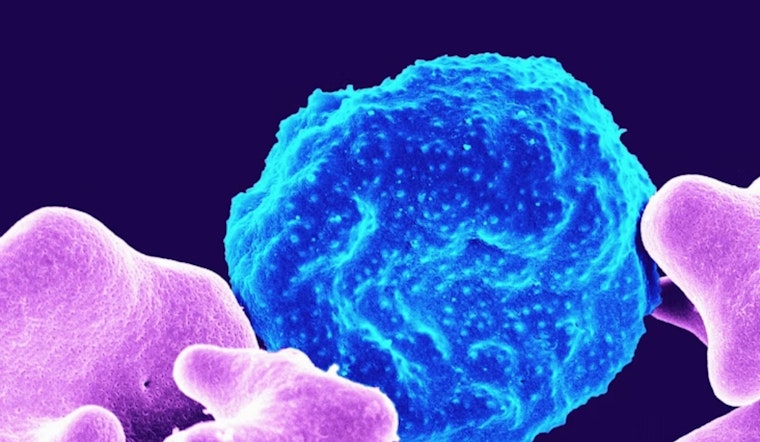
La Jolla scientists at UC San Diego and Sanford Burnham Prebys are testing a three-pronged attack on ovarian tumors in mice, and the early signs are intriguing. The experimental strategy combines a focal adhesion kinase (FAK) blocker with low-dose chemotherapy and immunotherapy. In preclinical models of aggressive, chemotherapy-resistant ovarian cancer, the cocktail pulled more tumor-fighting immune cells into the cancer and slowed tumor growth, leading to smaller tumors and longer survival in mice.
The work is still confined to the lab, but researchers say it outlines a detailed roadmap for coaxing immunotherapy to work in a cancer type notoriously hard to budge.
How the Triple Combo Rewires Immunity
In the lab models, shutting down FAK changed what the tumor cells were sending out into their surroundings. When FAK was blocked, ovarian tumor cells released tiny particles rich in omega-3 fats that reprogrammed nearby resident peritoneal macrophages. Those macrophages then started secreting CXCL13, a chemokine that helps pull in B and T cells and supports the formation of tertiary lymphoid structures.
That is where the sequence becomes critical: FAK inhibition followed by pegylated liposomal doxorubicin (PLD) and checkpoint blockade increased immune cell infiltration and tightened tumor control, according to Sanford Burnham Prebys. “Once it was established that genetically or pharmacologically targeting FAK improved the ability of the immune system to recognize and attack ovarian tumor models, then we needed to figure out how this worked,” Kevin Tharp said in the institute’s news release.
Peer-Reviewed Results In Mice
The data are laid out in Cell Reports, where the authors report that the triple regimen suppressed orthotopic ovarian tumor growth and extended survival across three different syngeneic mouse models. The study links the benefit to CXCL13 secreted by macrophages and the resulting recruitment of B and T cells, which together helped convert so-called “cold” tumors into “hotter” ones that the immune system could better recognize.
FAK Drugs Are Already In The Clinic
FAK-targeting drugs have already made it into human testing. Earlier clinical studies have paired the FAK inhibitor defactinib with checkpoint inhibitors in ovarian cancer, and newer combination trials are now exploring defactinib with agents such as avutometinib. A Phase 1/1b study of defactinib plus the checkpoint inhibitor avelumab in ovarian cancer is listed on ClinicalTrials.gov, and oncology reporting has flagged encouraging early activity for some defactinib combinations, according to OncLive. Those ongoing efforts give researchers a clinical foothold for eventually testing the triple approach the La Jolla teams have mapped out in mice.
Why This Matters In San Diego
The project was led out of La Jolla, anchoring high-concept lab work in San Diego’s cancer ecosystem. The Schlaepfer group at UC San Diego’s Moores Cancer Center teamed up with Tharp’s lab at Sanford Burnham Prebys, connecting basic mechanistic studies to local clinical expertise, as reported by The San Diego Union-Tribune. Moores Cancer Center is the region’s NCI-designated comprehensive cancer center, which gives San Diego the infrastructure to help move promising lab findings toward early human testing, according to Moores Cancer Center.
What Comes Next
The authors and the institutions behind the work are careful to stress that these are preclinical findings. More research will be needed to assess safety, dosing and effectiveness in people, and to learn whether the immune rewiring seen in mice will hold up in patients, according to Sanford Burnham Prebys. Still, the step-by-step mechanism they outline - from FAK blockade to macrophage reprogramming to B and T cell recruitment - hands clinical investigators a concrete hypothesis to test in trials that combine FAK inhibitors with carefully chosen chemotherapies and immunotherapies.





