

























































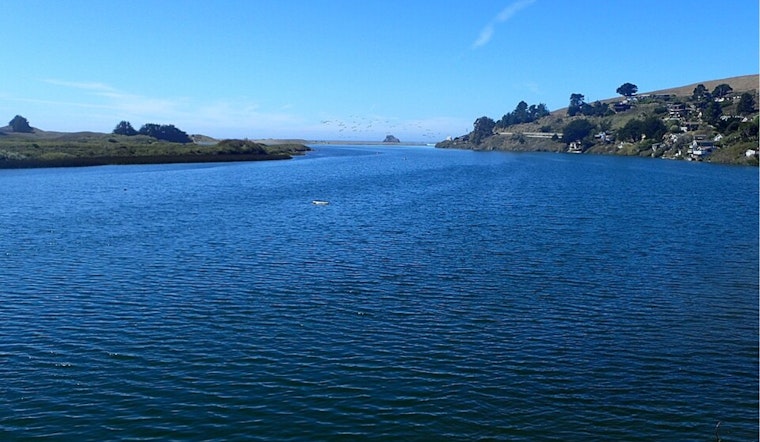
With early rains coming in lighter than hoped, managers at Lake Mendocino are tapping the brakes on planned spring water releases to keep more in the bank for later. The move is meant to protect cold pools for fish and safeguard drinking water supplies for communities downstream, even if it means some stretches of the Russian River run lower than usual for now while operators wait on clearer forecasts and the heart of the rainy season.
As reported by The Press Democrat, Sonoma Water and federal dam managers cut back minimum instream flows on the Russian River this spring to preserve reservoir storage. The upper Russian River minimum was dialed down from 185 cubic feet per second to about 75 cfs, and the lower river minimum was trimmed to roughly 85 cfs. Combined with smaller-than-average early-season rainfall, those adjustments helped trigger the decision to hold more water back at Mendocino.
Sonoma Water says those lower-flow targets were requested through a Temporary Urgency Change Petition, or TUCP, which lets managers temporarily modify minimum instream flows to protect both fish and stored water later in the year, according to Sonoma Water. The agency has leaned on the TUCP process in recent years to sync reservoir operations with updated biological guidance while keeping supplies available for cities, farms and small water districts.
The U.S. Army Corps of Engineers, which operates Coyote Valley Dam at Lake Mendocino, has also updated its water-control manual to use forecast-informed reservoir operations, or FIRO, allowing crews to hold onto water until a forecasted storm is more certain. “Before this update, we would inevitably be required to release water…,” said Nick Malasavage of the Corps, who noted that the new tools can free up thousands of acre-feet of storage when conditions allow, per the U.S. Army Corps of Engineers San Francisco District.
Local officials say the managed drawdowns are an effort to walk a fine line between conservation and summer fun on the water. Don Seymour of Sonoma Water told The Press Democrat that flows will remain adequate for recreation and enjoyment of the river, even as managers work to conserve water in the reservoirs.
Legal and water rights
Any formal curtailment of water-rights holders would come from the State Water Resources Control Board, which reviews temporary-urgency petitions and can alter permit conditions under state law. The board’s public notice and orders spell out how TUCPs allow temporary adjustments to minimum instream flows to prevent reservoirs from being drained too quickly, while still protecting legal protections for fish and downstream users, according to the State Water Resources Control Board.
Why this matters: Lake Sonoma and Lake Mendocino together anchor drinking-water systems and agriculture across the region. The Corps notes that the two reservoirs are central to a system serving more than 600,000 people in parts of Mendocino, Sonoma and Marin counties, so every operational choice ripples through farms, small suppliers and cities downstream, per the U.S. Army Corps of Engineers San Francisco District.
Managers say they will keep a close eye on forecasts and river gauges and will post any changes to releases or diversion curtailments publicly. Water users are urged to monitor Sonoma Water and the State Water Board for official notices. Updates to storage targets, petitions and orders are available on Sonoma Water’s TUCP page and on the State Water Board’s site, which the board uses to publish formal notices and associated deadlines, per the State Water Resources Control Board.



