

























































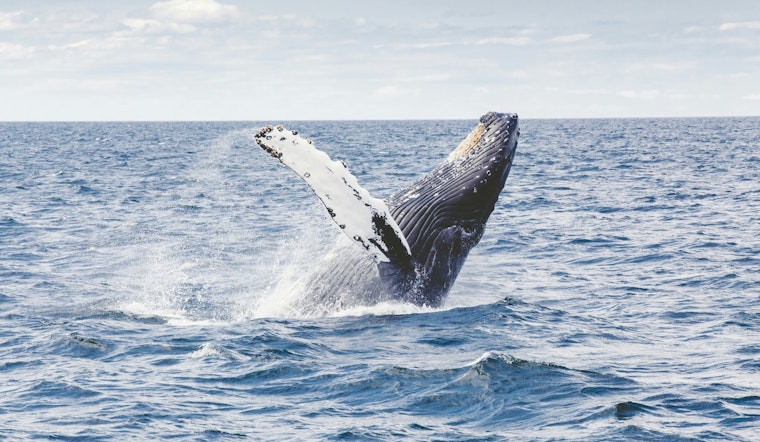
A Baird’s beaked whale that normally cruises the deep, cold Pacific turned up dead on Washington’s Long Beach Peninsula on Friday, triggering a rapid response from federal, tribal and local marine-mammal teams. Crews photographed and documented the carcass and are now weighing access and safety concerns before deciding whether they can retrieve the animal for a full examination. The species usually stays far offshore in deep water, so finding one on this busy stretch of sand is anything but routine, and it comes in the middle of an already crowded spring for large-whale strandings along the Pacific Coast.
NOAA Fisheries has identified the animal as a Baird’s beaked whale and said it was discovered on the Long Beach Peninsula, according to OPB. NOAA’s species account explains that Baird’s beaked whales “prefer cold, deep ocean waters” and only occasionally show up near shore along narrow continental shelves, which is part of what makes this stranding stand out. Responders will catalog the whale and collect samples where conditions allow to help determine why it died, and OPB reported that at least 19 whales have washed ashore along the West Coast so far this year.
NOAA Press Officer: An Uncommon Visitor
Michael Milstein, a press officer with NOAA’s Northwest Fisheries Science Center, told OPB that Baird’s beaked whales are rarely found stranded in Oregon “as they tend to frequent more distant, deeper waters.” Each unusual arrival like this one becomes another data point that scientists can plug into their broader picture of marine-mammal health, shifting movement patterns and interactions with human activity.
How Responders Handle a Large-Whale Stranding
The West Coast Marine Mammal Stranding Network is responsible for coordinating scene safety, documentation and sample collection when a large whale comes ashore, according to NOAA Fisheries. Local specialists, including tribal teams and groups such as Cascadia Research Collective, help with field exams and the heavy logistics of working around a multi-ton animal when access and tides cooperate. Officials stress that the public should keep a wide berth and instead report stranded or injured marine mammals to the West Coast hotline at 1-866-767-6114 so trained crews can secure the site and preserve evidence and samples for research.
What Researchers Will Look For
When conditions allow, responders follow up with necropsies and lab work that can tease apart possible causes of death such as vessel strike, entanglement, disease or poor body condition. Regional research has repeatedly pointed to malnutrition and ship strikes among the more frequently confirmed findings. A recent analysis in Frontiers in Marine Science highlights how changes in prey and ocean conditions can leave migrating whales in leaner shape and more vulnerable to collisions or entanglement. Any lab results and tissue tests from the Long Beach whale could take weeks to arrive, and whatever scientists find will be folded into the broader datasets they use to track long-term trends for whales along the Pacific Coast.


