

























































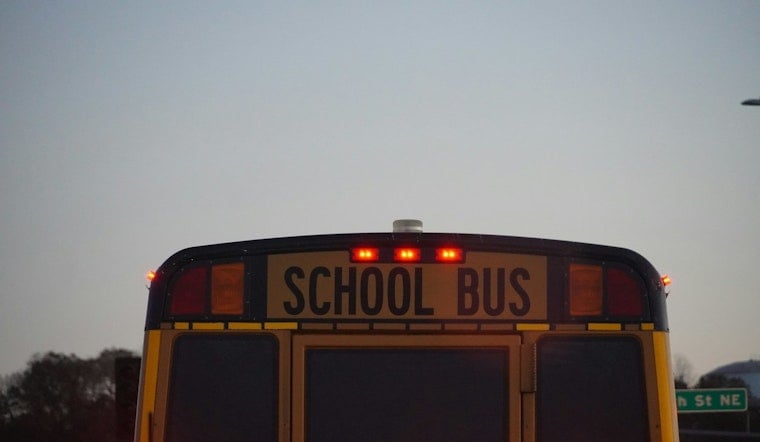
That split-second window some Minnesota drivers tried to use to slip past a school bus is history. Lawmakers have closed a narrowly interpreted stop-arm loophole, making it illegal to pass a school bus the moment its red lights begin flashing, even if the mechanical stop arm has not fully swung out yet. The fix targets the tiny gap that courts said could let motorists off the hook, and state officials rolled it out at an April 28, 2026 press conference that covered both city streets and rural routes.
What changed
Governor Tim Walz signed the bipartisan bill into law on March 27, 2026, according to the governor's office. The updated language amends Minnesota Statute 169.444 so that a vehicle must stop at least 20 feet from a school bus when it is displaying flashing red lights and may not move until those lights are no longer flashing. The bill text is posted by the Minnesota Revisor of Statutes and takes effect the day after final enactment.
Why lawmakers moved fast
The legislative tune-up came on the heels of a Minnesota Court of Appeals decision that reversed a conviction after finding that the old statute required a stop arm to be fully "extended" before a driver had a legal duty to stop. That precedent, set in the case State v. Waln and detailed by Justia, effectively created a split-second opening for motorists. Lawmakers said that sliver of time was an unacceptable risk for children waiting at bus stops and told reporters the tweak was intended to shut it down.
Enforcement and cameras
Officials say the clarified statute will work hand in hand with existing enforcement tools, including Minnesota's stop-arm camera grant program. The Minnesota Department of Public Safety has run several grant rounds reimbursing districts and vendors for camera systems and recently announced nearly $1.5 million in a new round, with earlier phases equipping about 6,998 buses across the state, according to the Department of Public Safety. Local coverage has also shown stop-arm citations climbing in recent years, from roughly 368 in 2021 to about 747 last year, a trend lawmakers pointed to in calling the bill urgent during testimony, per the Star Tribune.
At the press conference
State leaders and safety advocates used the Monday press event to walk through the new language and how it will be enforced. FOX 9 streamed the full conference, where Sen. Ann Johnson Stewart called the bill a "straightforward fix" that will help keep students safer. Lawmakers also highlighted that the measure cleared both chambers unanimously, a rare bit of across-the-aisle harmony on a traffic safety issue.
How drivers should respond
For drivers, the instructions are about as simple as it gets: if you see a school bus's red lights start flashing, slow down and stop at least 20 feet away, then stay put until the lights stop flashing. The revised statute spells that duty out clearly in the text, which you can read via the Minnesota Revisor of Statutes. Anyone who keeps rolling anyway faces fines and, when a child is put in danger, potential criminal charges.
Legal implications
By tightening the wording, the Legislature has left less room for future appeals that hinge on a narrow reading of the word "extended." The appeals decision that triggered the rewrite, State v. Waln, raised detailed questions about the precise moment a driver became responsible for stopping, and legal analysts noted that the ruling turned on how that single word was used in the statute, according to Minn Lawyer. In practical terms, prosecutors and officers reviewing camera footage should now have a more straightforward path to linking a flashing red light to a legal duty to stop than they did under the disputed reading.





