

























































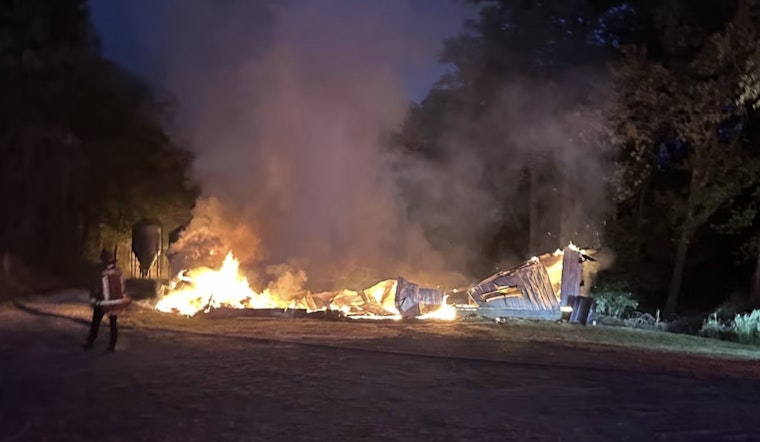
A late-night blaze tore through a commercial chicken house on Highway 51 South in Lula on Tuesday, killing all 22,000 birds inside and leveling the building. Fire crews fought not only the main structure fire but also several small brush fires that sparked nearby. No human injuries were reported, and investigators are now sorting through the debris to figure out how the fire started. The sheer scale of the loss is already raising thorny questions about how the farm will safely dispose of the carcasses and protect surrounding operations.
Banks County fire officials told WSB-TV that crews arrived Tuesday night to find the commercial poultry house already fully engulfed. By the time firefighters could get water on the flames, all 22,000 chickens were dead and the building was a total loss. According to the station, several brush fires tied to the incident were put out quickly, and no people were hurt. The cause remains under investigation, and officials say electrical problems cannot yet be ruled out.
Why confinement fires are so deadly
Barn and poultry-house fires can turn devastating in minutes. Birds are packed in at high densities, and the buildings are not designed for rapid animal evacuation, which means once a blaze gets going there is virtually no way to save the flock. The Animal Welfare Institute’s barn-fire tracker has logged repeated mass-casualty incidents across the country, showing how a single structure fire can wipe out tens of thousands of birds, according to the Animal Welfare Institute. Firefighters and industry watchers often point to dry litter on the floor, heating and electrical equipment, and the timing of fires overnight when barns are unstaffed as factors that compound the risk in large confinement operations.
Disposal and biosecurity challenges ahead
Now the farm operator faces a different kind of emergency. Disposing of 22,000 dead chickens is not just unpleasant work, it is tightly regulated and has to be handled fast. University of Georgia Extension guidance notes that state rules require dead poultry to be dealt with within 24 hours and spell out the options for doing it legally and safely. Approved methods include burial, composting, incineration and rendering, each with its own environmental safeguards and oversight, according to UGA Extension. County and state officials will have to sign off on a disposal plan that protects water quality and avoids turning a fire disaster into a disease or pollution problem.
What to expect next
Banks County Fire & Emergency Services will continue to investigate the blaze and may bring in the state fire marshal depending on what they find. Residents who want the official paperwork can request fire reports through the county’s administrative offices, as outlined on the county FAQ page. Local and state agencies are also expected to coordinate with the farm operator on biosecurity measures and any environmental permits tied to carcass disposal. This story will be updated if county or state officials release additional information.





