

























































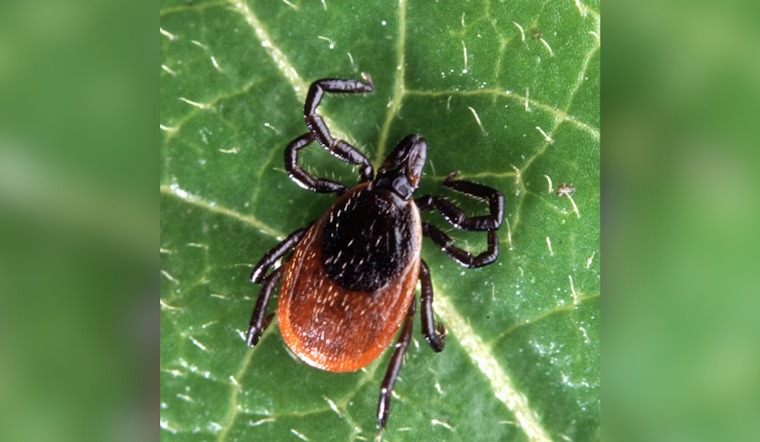
A new University of Maryland mathematical model released this spring suggests that as the state heats up, Lyme-carrying deer ticks could ditch Maryland's dense coastal and central counties and creep into the cooler, less populated western hills. That shift would redraw the state's Lyme disease risk map, with total statewide cases potentially dropping even as fresh hot spots emerge in places where health resources and surveillance are already stretched thin.
Model maps where ticks may thrive
According to University of Maryland Today, researchers built a mechanistic model and calibrated it with roughly two decades of ecological and case data to simulate how the black-legged tick (Ixodes scapularis) responds to surface warming. The team found that tick survival and Lyme transmission peak inside a narrow temperature band of about 17 to 20.5°C (63 to 69°F). As Maryland warms, that climatic "sweet spot" is projected to slide west on the map rather than simply expand. The peer-reviewed analysis is detailed in Royal Society Open Science.
Maryland logged under 2,500 reported Lyme cases in 2023, according to the Maryland Department of Health, though public health officials caution that many infections never make it into the official counts. The demographic twist is that central, southern, and eastern counties, which collectively hold about 70% of Maryland's population, could see fewer infections while cooler western counties warm into the ticks' preferred range, as reported by Fox Baltimore. That mismatch between where people live and where risk is rising could complicate decisions about where to send prevention funding and outreach campaigns.
Public-health response and interventions
The University of Maryland team stresses that a drop in statewide numbers would not mean the problem is solved. Instead, the concern is that it could hide new local vulnerabilities in the West. "This study helps answer a central question in ecology, whether and how anthropogenic climate change will alter these diseases' distribution and burden," study senior author Abba Gumel said, according to University of Maryland Today. Their model looks at a package of tools that includes rodent baiting, habitat clearance, and personal protection and concludes that eliminating Lyme disease transmission is mathematically possible, but hotter conditions would require much higher levels of these interventions to get there.
Where the risk could grow
The projected shift in risk would put extra pressure on Western countries that already operate with fewer health resources. Garrett County, for instance, recorded the state's highest Lyme incidence in 2023 at about 306 cases per 100,000 residents, and limited surveillance funding makes early detection harder, The Baltimore Banner reports. If the model's projections hold, rural health departments may need to ramp up testing access, public education, and partnerships for tick control just as the problem moves into their backyard.
How Marylanders can protect themselves
State and federal agencies continue to push familiar but effective tick-avoidance routines. Officials recommend using EPA-registered repellents such as DEET or picaridin, treating clothing and gear with permethrin, doing thorough tick checks after outdoor activities, and removing attached ticks as quickly and carefully as possible. The Centers for Disease Control and Prevention and the Maryland Department of Health provide step-by-step instructions on safe removal and guidance on when to seek testing or treatment. Pet owners are urged to keep dogs and cats on veterinarian-recommended tick preventives and limit their access to brushy or wooded areas near homes.
The new modeling complicates a simplistic climate storyline. Warming in Maryland is not expected to boost Lyme risk everywhere at once so much as shuffle who is in the danger zone. For the full modeling details and on-the-ground coverage, see the study in Royal Society Open Science and reporting by WBFF/Fox Baltimore.





