

























































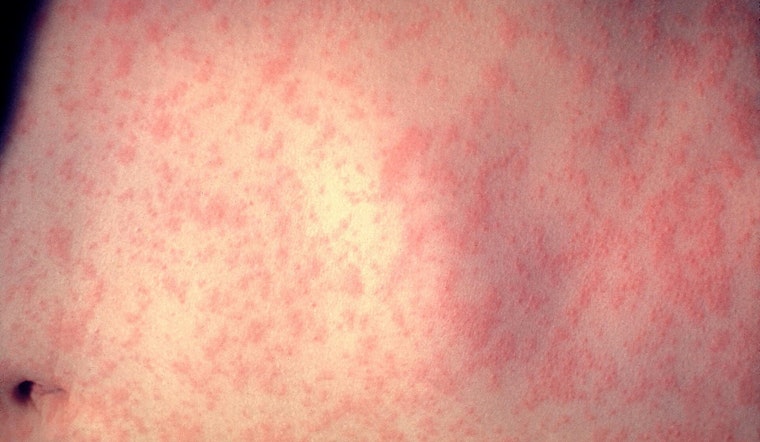
Georgia health officials are sounding the alarm as measles turns up in the state and fragments of the virus are spotted in Atlanta-area wastewater, all while a large outbreak in neighboring South Carolina keeps growing. Public-health teams are ramping up testing, contact tracing and vaccination outreach, warning that infants and people who are unvaccinated remain most at risk. Officials say wastewater detections can flag infections that have not yet hit the clinic, giving communities a head start on their response.
What Georgia officials found
The Georgia Department of Public Health has confirmed the state's first reported measles case of 2026, a baby who acquired the infection during international travel, and says it is working to identify anyone who may have been exposed, according to the Georgia Department of Public Health. The agency reminded clinicians that they should report suspected measles immediately and collect appropriate specimens for laboratory testing. DPH reiterated that the MMR vaccine is safe and is the best defense for most people.
Wastewater detections hint at undetected infections
Routine wastewater surveillance picked up measles RNA in samples taken from a North Metro Atlanta sewer system in August 2025, according to a health alert summarized by regional public-health networks. The alert stressed that a positive wastewater sample is not the same as a confirmed clinical case, but it "could mean" someone with measles was present in the area or had passed through at the time of sampling, per Region J. Wastewater monitoring has become a kind of early warning siren in outbreaks, often detecting virus before individual cases are diagnosed and reported.
South Carolina outbreak is driving nearby risk
A large outbreak centered in Spartanburg County, South Carolina has grown into the nation's largest cluster in decades and continues to generate related cases across state lines, raising the odds that new infections will be imported into Georgia, according to the South Carolina Department of Public Health. South Carolina officials are still pursuing broad contact tracing and vaccination campaigns in an effort to contain continued transmission.
The national picture
The Centers for Disease Control and Prevention reports 1,714 confirmed measles cases in the United States as of April 9, 2026, and warns that national MMR coverage among kindergartners has slipped below the 95% threshold that helps prevent outbreaks, according to the CDC. Most confirmed infections remain outbreak associated and disproportionately affect people who are unvaccinated or under vaccinated.
How to protect your family
Public-health guidance continues to emphasize that the MMR vaccine is the most effective protection. Children should receive a first dose at 12 to 15 months and a second dose at 4 to 6 years, and infants ages 6 to 11 months who are traveling internationally should get an early dose, per Georgia Department of Public Health guidance. The alert also instructs clinicians to isolate suspected cases immediately and to notify public-health authorities so that contact tracing and testing can begin without delay.
What to do if you think you were exposed
If you develop fever along with cough, runny nose, red eyes or a rash, call your health care provider before you show up so staff can take proper precautions and arrange testing. Unvaccinated people and infants are at highest risk; those without documented immunity should consult a clinician about MMR vaccination or, in some situations, immune globulin. Local health departments will lead contact tracing and can direct residents to vaccine clinics and testing resources.
Local reporting from 11Alive summarized the recent detections and community concerns on April 15. Hoodline will monitor state and local health updates and public-health notices as investigations continue.



