

























































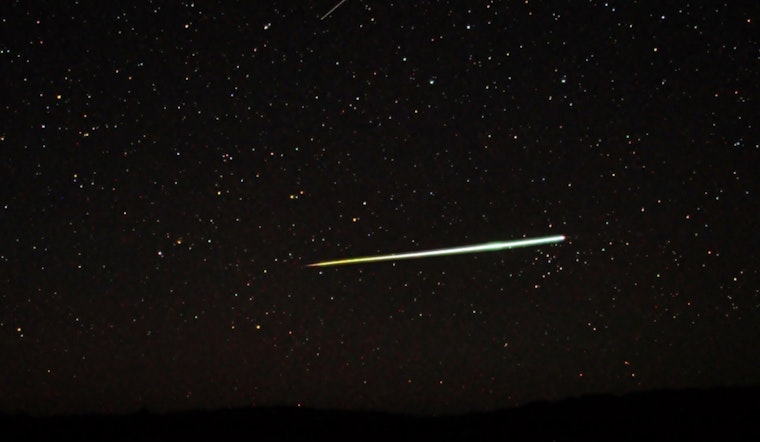
A surprise daytime fireball tore across the sky over parts of New Jersey and Pennsylvania on Tuesday afternoon, briefly turning a routine day into a skywatching event. Short clips of the flash quickly started bouncing around social feeds, with witnesses describing a bright greenish head and a long glowing tail before the object faded out. No injuries or damage were immediately tied to the sighting.
Videos of the streaking light were shared online, according to CBS Philadelphia, which aired a short clip featuring NEXT Weather meteorologist Grant Gilmore. Gilmore said the flash lined up with what you would expect from a bright meteor or "fireball," the term used when a very luminous meteoroid burns up in Earth's atmosphere.
Why scientists say it appeared
NASA's "Watch the Skies" blog notes that fireball reports tend to ramp up from late winter into spring, especially around the March equinox, when more sporadic meteors plunge into the atmosphere. The agency and researchers track these bursts of light using the All-Sky Fireball Network and other sensors, building out a running record of how often they occur.
Last month, a daytime bolide over northeastern Ohio, later examined by NASA and reported by the Associated Press, produced a loud sonic boom and drew dozens of eyewitness accounts. Larger fireballs like that are rare, especially in daylight, but they help explain why people across several states occasionally spot dramatic flashes even when the sun is still up.
How to help scientists
If you caught Tuesday's streak on camera, researchers would like to see it. They ask that you upload timestamped video, along with the exact time and your location, to the American Meteor Society's reporting page so investigators can triangulate the object's path. The AMS keeps a public log of incoming reports and uses eyewitness clips to reconstruct trajectories. If you stumble across any suspected meteor fragments, officials say to contact local authorities and avoid handling them directly.
Skywatchers might also want to keep an eye on upcoming activity. The Lyrid meteor shower is expected to peak in mid to late April, a stretch when occasional bright fireballs are more likely, according to EarthSky and meteor experts. For now, residents across the region say they are more intrigued than alarmed as meteor season keeps tossing surprise flashes into the daytime sky.



