

























































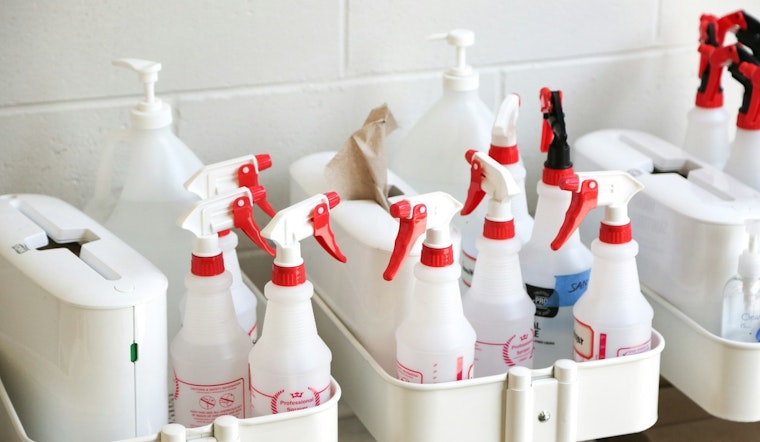
Chlorhexidine is supposed to be the stuff that stops trouble at the hospital door. Yet a new Northwestern University study suggests that Chicago's go-to antiseptic might be quietly helping some microbes toughen up and stick around.
Last Thursday, researchers reported that chlorhexidine, the antiseptic hospitals use to scrub patients' skin, can leave trace residues that persist in patient rooms and help microbes develop tolerance. The team found tolerant strains across a medical intensive care unit, with sink drains and airborne dust turning up as unexpected reservoirs and transport pathways.
The study at a glance
In lab microcosm experiments and an on-site survey inside a medical ICU, researchers collected nearly 200 environmental samples and grew more than 1,400 bacterial isolates. About 36% showed measurable tolerance to chlorhexidine, and some isolates had minimum inhibitory concentrations as high as 512 g/mL, according to Environmental Science & Technology. The team also identified candidate resistance determinants, including qacEdelta1-carrying, plasmid-borne multidrug cassettes, suggesting genetic mechanisms that could spread tolerance between strains.
The paper pairs chemical persistence data with whole-genome analyses to argue that sublethal residues on surfaces can select for and disseminate tolerant organisms. In other words, a little leftover antiseptic in the wrong place can become a training ground for hardier microbes.
Where residues concentrate
Researchers singled out sink drains as the biggest hotspot for chlorhexidine-tolerant bacteria and warned that running water can generate aerosols that reintroduce microbes into patient rooms, as described in Northwestern's news release on EurekAlert!. Those tiny droplets can carry bacteria from the plumbing right back into the air that patients and staff breathe.
"Microbes and chemicals do not stay where we put them," said Erica Hartmann, the study's lead author, stressing that airflow and reservoir management deserve more attention in critical-care settings.
Local implications for Chicago hospitals
For Chicago hospitals that rely on chlorhexidine for pre-op prep and daily MICU bathing, the results highlight a familiar trade-off between preventing infections and avoiding environmental selection for tolerance. As reported by Crain's Chicago Business, infection-prevention teams may start paying closer attention to sink design, drain maintenance and cleaning regimens as part of routine surveillance.
None of this means an immediate rethink of chlorhexidine baths on every floor, but it does push environmental engineering and plumbing squarely into the infection-control conversation.
What the researchers recommend
The authors argue for an integrated approach that combines clinical practices with environmental management, from how CHG-containing wipes are used to targeted drain interventions, to preserve chlorhexidine's benefits while limiting unintended selection, the paper says in Environmental Science & Technology.
Northwestern's press materials also note that Hartmann cautioned the general public against over-disinfecting homes and offices, recommending plain soap and water for routine cleaning, per the university's coverage. Save the heavy-duty antiseptics, the message goes, for when and where they are truly needed.
What hospitals might do next
Hospitals will have to weigh these findings against decades of infection-control data showing CHG reduces bloodstream and surgical-site infections. Any policy shifts will likely follow additional surveillance and targeted trials rather than a rapid pivot away from a long-standing tool.
For now, experts tell Medical Xpress and other outlets that CHG remains an important tool in high-risk care while engineers and infection-prevention teams look for environmental fixes, particularly around drains and airflow. The scrub is not going anywhere yet, but Chicago hospitals may be taking a harder look at where those leftover drops end up.





