

























































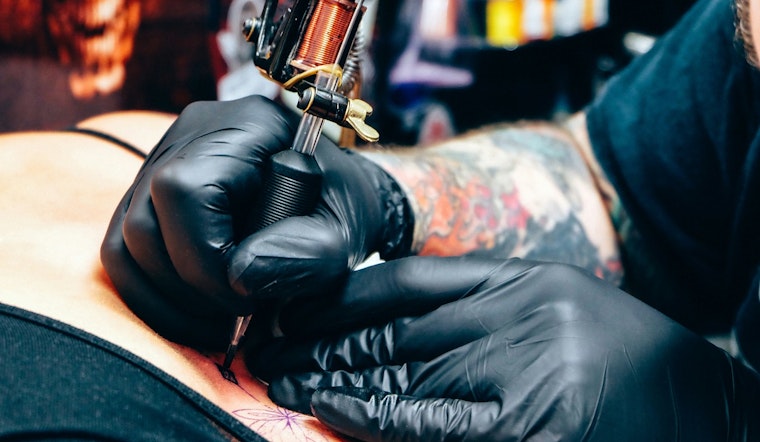
Oregon health officials have told licensed tattoo artists they can no longer apply over‑the‑counter topical anesthetics such as Bactine or common numbing creams. The abrupt clarification has Portland studios and tattooers around the state scrambling, with appointments being reshuffled and some artists warning the move could gut the permanent‑makeup business.
What the health agency wrote
In a practice clarification dated March 25, 2026, and revised March 31, the Health Licensing Office said "the administration of topical anesthesia to a client by a licensed tattoo artist is not within the scope of practice" for body art. The memo cautions that putting drugs on someone else may qualify as the practice of medicine and warns that licensees who do it anyway could face civil penalties, suspension or revocation of their license, and even possible criminal charges, according to the Oregon Health Authority.
Artists push back
Cosmetic and medical tattooists say the clarification dropped without warning and has immediate fallout for their livelihood. "It's just going to devastate the whole permanent makeup industry completely," said Heather Parish, a Beaverton cosmetic tattoo artist. Fellow artist Kaysie Anderson wrote that she "uses numbing for nearly every single service I perform."
Even in traditional tattoo shops, the change is rippling fast. Sean Lanusse, an artistic tattooer at Thunderbird Tattoo in St. Johns, said many studios keep Bactine on hand for longer sessions, and that bottles have already disappeared from work stations, as reported by Oregon Public Broadcasting.
Scope and the safety loophole
The clarification applies across Oregon because tattoo artists are all licensed under the same program, whether they focus on decorative pieces, permanent makeup or medical tattooing. The Health Licensing Office notes that clients are still allowed to put topical products on themselves, since self‑administration is outside the board's authority.
That detail sets up an awkward loophole. Some artists worry it will push risk onto clients, who might reach for stronger or unfamiliar products without proper guidance. Practitioners say unregulated or improperly applied numbing agents can change skin texture or interfere with how pigment is implanted, which can increase the odds of bad results, according to the Health Licensing Office.
Enforcement and past actions
The HLO can investigate complaints, inspect facilities and take disciplinary action if it finds violations. As reported by Oregon Public Broadcasting, a state spokesperson said the agency has already taken two disciplinary actions tied to topical anesthesia use, one involving application around the eye and another involving medical‑grade lidocaine. HLO staff also told reporters that Oregon Revised Statute 690.350 does not mention topical anesthesia.
In an email, Derek Fultz, a qualification analyst at HLO, wrote that because the statute does not reference topical anesthesia it "is not something that can be turned into a rule or voted on by the Board or public," according to the outlet.
What this means for clients and clinics
For clients, the practical takeaway is blunt but simple: you can still buy and put on over‑the‑counter numbing products yourself, but your licensed tattoo artist is no longer allowed to do it for you. On top of that, any body‑art facility that wants to sell nonprescription products now needs the proper license from the Board of Pharmacy, which adds another layer of paperwork for some shops.
In the meantime, many Portland studios are quietly rewriting their playbooks. Some are tweaking booking policies, asking clients who want numbing to arrive with products already applied. Others are breaking up work into shorter sessions so clients are not enduring marathon appointments without anesthetic support.
Legal implications
HLO has framed the move as an interpretation of existing law, not a brand‑new rule. On the ground, though, it immediately raises legal risk for artists who keep administering topical anesthetics to clients. Industry groups and individual practitioners say they plan to push for clearer regulations or a legislative fix that better balances safety concerns with the day‑to‑day realities of cosmetic and medical tattooing.


