

























































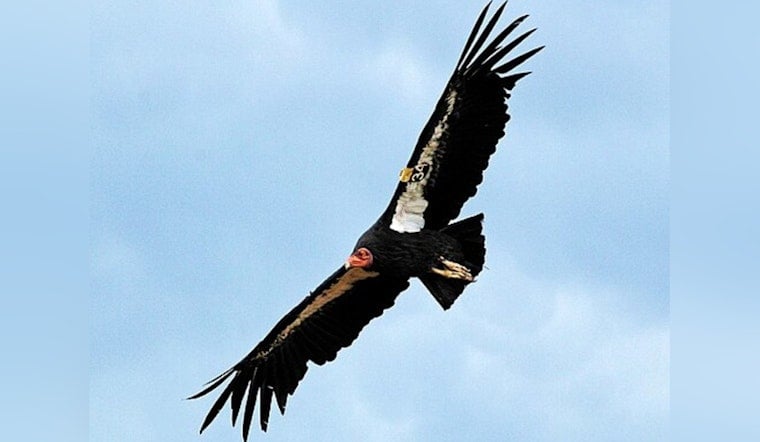
A young California condor with the decidedly unromantic nickname B9 has officially put Oregon back on the condor map. In mid-May, the two-year-old bird became the first documented free-flying condor in the state since 1904, crossing the border from Northern California, looping to within eight miles of Medford, then heading back south. Tribal and federal biologists say her roughly 380-mile round-trip is a strong sign that the Yurok-led restoration effort is successfully pushing the species back into its historical territory.
How B9 Traveled
B9 (studbook 1268) hatched on April 3, 2024, at the World Center for Birds of Prey in Boise and was released into the redwood region last fall. On May 12, she lifted off from Orick, California, and started a four-day, roughly 380-mile adventure. She flew north past Redding, crossed over the Northern Trinity Alps and the Marble Mountain Wilderness, swung to within eight miles of Medford, Oregon, and spent nights near Cave Junction and Brookings before returning to her release area on May 16. The trip expanded the Northern California Condor Restoration Program’s range by several dozen miles, and parts of the route had her clocking around 100 miles per day, according to National Park Traveler.
Tribal Leadership, Zoo Partners React
Yurok Wildlife Department Director Tiana Williams-Claussen described B9 as “especially curious” and said those long daily flights are exactly the kind of exploratory behavior biologists expect from young birds learning the landscape. The last wild condor documented in Oregon was seen in the Drain area between Eugene and Roseburg in 1904, a detail highlighted by regional public media. Partner organizations, including the Oregon Zoo, praised the milestone and stressed how central tribal leadership has been to bringing condors home, as reported by OPB.
Federal-Tribal Recovery Work Underpins Return
B9’s big swing into Oregon is the visible payoff of a long-running partnership between federal agencies, tribes and park managers to reintroduce condors to the Pacific Northwest. That planning proposed a collaboratively managed release facility and an experimental population designation to allow more flexible local management, which has been outlined by the U.S. Fish & Wildlife Service and National Park Service as the policy foundation for northern reintroductions. Background on the program and its goals is available from the U.S. Fish & Wildlife Service.
Why This Matters And What Still Threatens Condors
Condors are apex scavengers that handle cleanup duty in wild ecosystems and also hold deep cultural meaning for tribes. Their return helps restore both ecological function and long-suppressed cultural lifeways in places where the birds have been missing for more than a century. The comeback is still fragile, though. Lead poisoning from ammunition and other environmental contaminants remains a major threat, so partners continue to lean on regular health checks, wing tagging and aggressive lead-mitigation work. Those program details, along with the day-to-day efforts of zoo and field staff, are outlined by the Oregon Zoo.
What Comes Next
Biologists expect adventurous youngsters like B9 to keep wandering and for more condors to push into southern Oregon as the flock gets better acquainted with the region. Earlier this year, two condors attempted what would have been the program’s first redwood nest, although that egg did not hatch. Tribal leaders say B9’s border-crossing tour strengthens plans for additional releases and expanded monitoring across northern California and southern Oregon. Local outlets including KOIN and regional public radio have covered the milestone, and the Yurok program keeps the public in the loop with a condor cam and Condor Spotter tools for anyone who thinks they have seen one: Yurok Tribe.




.jpg)