

























































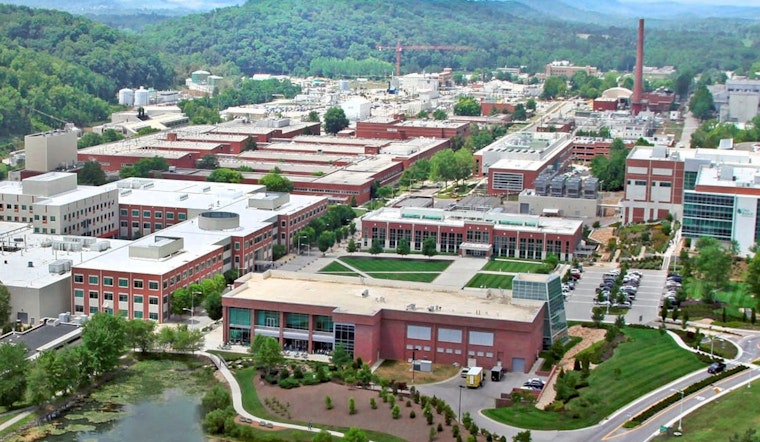
On Monday, a top Department of Energy cleanup official dropped into Oak Ridge with a sweeping pitch: turn remediated federal land into a new kind of company town built around nuclear reactors and AI supercomputers. Timothy Walsh told local leaders that Oak Ridge has the right mix of lab talent, cleaned-up parcels, and private capital to support medical isotope production, power-hungry data centers, and advanced reactor projects. The visit put Oak Ridge squarely in the spotlight of a broader federal push to speed nuclear deployment while boosting AI horsepower across the national labs.
Walsh Brings His Pitch To Oak Ridge
Walsh, the assistant secretary in charge of the Department of Energy’s Office of Environmental Management, met with local officials and researchers and stressed that cleanup work is not just a cost center; it can also create future industrial sites, according to the Knoxville News Sentinel. He laid out ideas for public-private land leases and similar deals that could both fund remediation and lure companies that need large volumes of dependable power. Walsh also pointed to Oak Ridge’s existing laboratory infrastructure as a natural partner for the federal Genesis AI initiative.
Genesis, Data Centers, and Federal Land Leases
The Department of Energy’s Genesis Mission already tags Oak Ridge as a home for new AI-capable systems, including a near-term Lux cluster that will link supercomputers, laboratories, and private partners to accelerate discovery, according to Oak Ridge National Laboratory. In parallel, DOE has started soliciting proposals to site AI data centers and co-located energy projects on federal property, a program that lists the Oak Ridge Reservation among the candidate locations, as reported by ExecutiveGov. Agency officials say the lease structure would allow private operators to build and run both compute and power infrastructure while helping to pay for ongoing cleanup.
Cleanup Work Is Already Spinning Off New Industry
Oak Ridge’s cleanup efforts are already generating commercial byproducts. Contractors processing legacy uranium 233 (U 233) at ORNL have recovered rare thorium 229 and other materials that support next-generation cancer treatment research, according to public updates from the DOE Office of Environmental Management. The Isotek–TerraPower partnership has turned U-233 disposition into a source of medical isotopes while simultaneously advancing disposal work and producing revenues that can speed up site reuse. That blend of remediation, isotope production, and laboratory expertise is the economic model Walsh was selling in town.
Agency Shake Ups And A National Nuclear Push
Walsh has also signaled internal changes at DOE’s cleanup office. At a recent conference, he said the Office of Environmental Management will be realigned and "soon" renamed the Office of Nuclear Restoration and Revitalization, according to industry coverage from ExchangeMonitor. Those shifts are unfolding as federal policy sets aggressive goals for expanding U.S. nuclear capacity, an ambition that Oak Ridge analysts say would demand large-scale investment in fuel, workforce, and supply chains to support a multi-hundred-gigawatt nuclear buildout.
Regulatory And Technical Hurdles
None of this is plug and play. Proposals to repurpose naval reactors or to fast-track new small modular reactors face substantial licensing, fuel, and safety challenges and would require Nuclear Regulatory Commission involvement plus lengthy environmental reviews. Industry concepts, including one plan to adapt retired Navy reactors for civilian AI data centers, have reached DOE and raised questions about feasibility and oversight, as detailed by Tom’s Hardware, while trade reporting has tracked DOE’s selection of initial federal locations for related solicitations. These regulatory and technical checkpoints will ultimately decide how quickly any of Walsh’s pitches can be built out on the ground.
What It Means For Oak Ridge
For Oak Ridge, the package on offer includes jobs, private investment, and new revenue streams that could help finish long-running cleanup projects without relying only on yearly federal budgets. Local leaders and lab managers point to the region’s access to TVA power and its decades of nuclear expertise as key advantages, according to the Energy Communities Alliance. At the same time, community groups and environmental watchdogs have raised concerns about timelines, transparency, and long-term stewardship of any new facilities. How quickly projects move from solicitations to shovels will depend on regulatory approvals, contract terms, and whether the market is willing to sign up for long-term power deals.
Walsh’s visit laid out a clear federal game plan: link cleanup to commercialization, cluster computing and power on DOE land, and try to shorten financing and permitting timelines. For residents, that could translate into a new wave of employers and a very different future for Cold War era sites, along with familiar debates over speed, oversight, and how much say the community really gets. DOE, ORNL, and local officials say more specifics are on the way as solicitations are finalized and partnerships take shape.





