

























































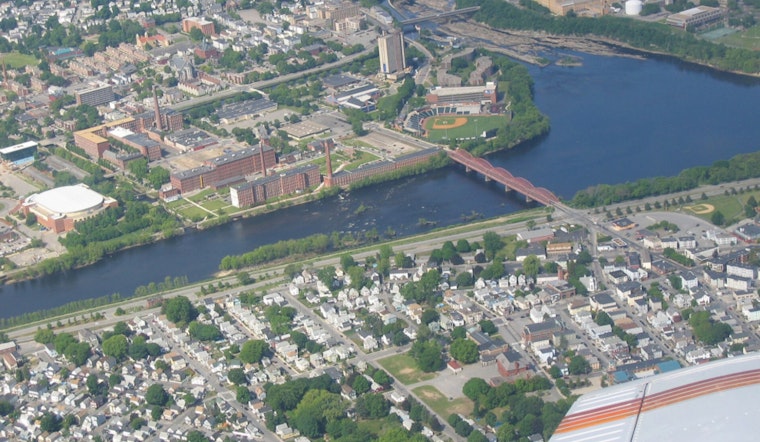
Downtown Lowell’s Jackson-Appleton-Middlesex (JAM) urban renewal district is suddenly staring at a potential multibillion-dollar makeover, as city planning materials and local reporting detail a proposal that could bring up to $2 billion in private investment to the area. At the center of the pitch is Solar International Core Canada Ltd. (SICC), a green-infrastructure partner named in the city’s Frontrunner materials and linked to Overseas Oil and Gas LLC. City officials say the proposed commitment would plug into the Lowell Innovation Network Corridor, or LINC, an $800 million-plus public-private growth plan anchored by UMass Lowell.
According to the Boston Herald, Lowell and SICC have signed a memorandum of understanding that gives the company “exclusive entitlement to serve as development manager or master developer for any project” in the JAM district, along with first-look evaluation rights on properties there. The Herald reports the agreement states SICC “will invest up to $2,000,000,000” in projects tied to the plan. Local leaders told the paper the MOU is meant to speed up downtown redevelopment by aligning university-driven and private investment in one coordinated push.
Lowell’s Frontrunner Bid And Global Model City Pitch
City planning documents prepared for Lowell’s Frontrunner initiative cast Solar International Core Canada as a strategic investor and list “green capital through Solar International Core Canada” as part of a blended funding model for the broader Lowell Vision 2040 effort. As outlined by City of Lowell materials, the Frontrunner designation, coordinated with the Urban Economy Forum and the World Urban Pavilion, positions the city as a living lab for climate-smart, tech-enabled redevelopment.
How The Billions Would Mesh With LINC
On paper, the SICC proposal is designed to complement the Lowell Innovation Network Corridor, the $800 million-plus LINC blueprint that UMass Lowell and its partners have been advancing. Materials from UMass Lowell describe LINC as an effort to add more than 1 million square feet of lab and office space, bring in hundreds of new housing units and create thousands of construction and permanent jobs. City officials say those commitments make LINC the natural landing spot for large private capital flows tied to university research, clean-energy projects and related commercial spinoffs.
Who Is Backing The Offer
Public documents tie Solar International Core Canada to a parent company called Overseas Oil & Gas LLC, a Muscat-based energy firm that describes itself as active in hydrocarbon trading and project development. The Overseas Oil & Gas website lists its headquarters in Muscat and outlines global trading and project activities. That oil-and-gas pedigree, some residents say, sits awkwardly alongside Lowell’s push to brand itself as a post-industrial, clean-energy-friendly university city. The city’s Frontrunner materials also link SICC to a broader Global Smart Nexus of technology and financing partners.
What Happens Next In JAM
For now, the memorandum of understanding is an early, nonbinding step. The JAM urban renewal framework still requires municipal review and formal approvals before any master developer is selected or any project can move forward. The city’s JAM plan page details the district’s history, along with the public-review and approval roles played by the City Council and planning staff in past redevelopment efforts, including the 900-space Edward Early Jr. garage, as shown by the City of Lowell. Neighborhood reaction online has been mixed, with local message-board posts questioning both the speed and the origins of the proposal. City leaders have stressed that the MOU is the beginning of a longer process rather than a final deal, according to the Boston Herald. Residents, reporters and councilors are now watching for formal development proposals and any City Council actions that would be needed to convert the MOU into binding agreements.





