

























































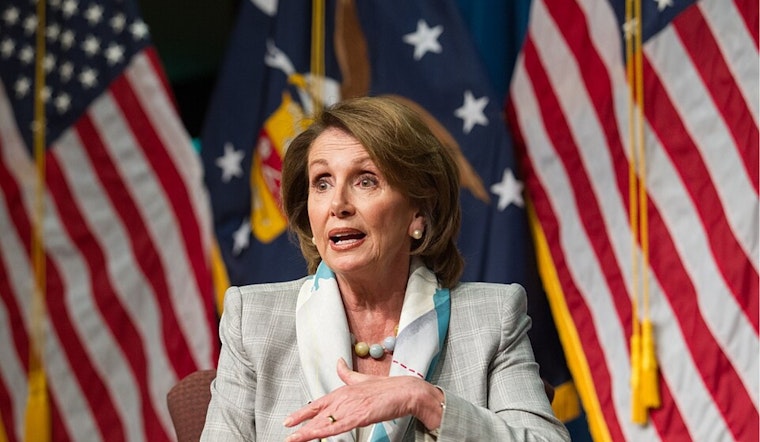
House Democrats turned a San Francisco law school classroom into a makeshift hearing room as former Speaker Nancy Pelosi led a "shadow" proceeding to challenge what she and her colleagues cast as the Trump administration’s power grab over mail ballots and voter eligibility.
The 90-minute forum at UC Law San Francisco on April 7 was designed to calm jittery Bay Area voters while dissecting a late-March executive order on mail voting. The goal: spell out how the order could reshape who gets to vote and who counts those votes, all while insisting that an election is still coming in November.
The panel featured Reps. Joseph Morelle, Mark DeSaulnier, Kevin Mullin and Mike Thompson, alongside witnesses including UC Law professor Rory Little, former California Secretary of State Kevin Shelley and Brian Renfroe, president of the National Association of Letter Carriers, according to KQED. Pelosi told the crowd she frequently hears the same worried question from voters: "Is there going to be an election?" Her answer was an emphatic yes, even as witnesses warned that the administration’s proposed changes could throw up new obstacles for voters. Lawmakers framed the gathering as part public briefing, part strategy session for courts and Congress.
What the executive order would do
The March 31 executive order at the center of the hearing directs the Department of Homeland Security to assemble state-specific "State Citizenship Lists" and instructs the Postmaster General to launch rulemaking to create state "Mail-In and Absentee Participation Lists." It also calls for new mail-envelope standards, including unique barcodes and automation-friendly designs that could be used to track and verify ballots. According to the White House, the Postal Service is supposed to propose rules within 60 days and finalize them within 120 days, a timeline experts at the San Francisco forum said would be tough to pull off in the real world.
Legal challenges are already underway
Opponents did not wait long to head to court. Within days of the order, civil-rights groups, party committees and multiple state attorneys general filed lawsuits targeting key provisions, arguing the administration lacks authority to commandeer state election systems and warning that the plan would disenfranchise eligible voters. A litigation tracker at Just Security notes that those filings have already pushed courts to weigh injunctions and stays, effectively putting major pieces of the order on hold while judges dig into separation-of-powers and statutory questions. Local officials at the San Francisco event said that, practically speaking, it is these lawsuits, not agency rulemaking, that will decide whether the order bites in time for the fall midterms.
Experts: The proposal risks confusion, not fraud
Witnesses at the forum took direct aim at the premise behind the executive order, rejecting the idea that noncitizen voting or widespread mail-ballot fraud are driving current election problems. Instead, they warned, the proposed fixes would mostly land on people who are already playing by the rules. As reported by the Los Angeles Times, experts said measures such as requiring in-person proof of citizenship to register and leaning on federally compiled voter lists could fall hardest on seniors, newly naturalized citizens and anyone who has trouble tracking down old birth records.
Back in the UC Law classroom, members of Congress tried to keep the core message simple: state and local election officials are still in charge, voters should still plan to cast ballots and voting early is still encouraged as the court fights unfold. For now, the executive order remains tied up in litigation, and election officials told attendees their guidance to the public is straightforward: expect a November ballot, and rely on official updates as the legal battle over the new rules plays out, according to KQED.





.jpg)