

























































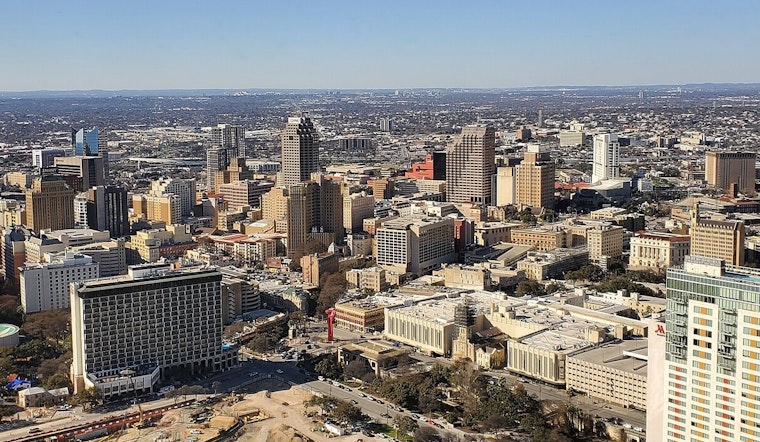
San Antonio just got a tough progress report on its long game. In a new national index that measures long-term civic resilience, the Alamo City lands at No. 151 out of the 250 largest U.S. metro areas, placing it in the bottom 40 percent nationwide and trailing every other major Texas metro. The report flags weaknesses in local governance and social cohesion, even as San Antonio posts a comparatively stronger score on climate resilience.
What the index measures
The Geography of Prosperity Index, developed by consultancy Human Change and advisory agency Motivf, evaluates 250 large U.S. metro areas across five equally weighted dimensions: population renewal, climate resilience, automation & AI readiness, social cohesion, and governance & foresight. The framework is designed to move past short-term economic snapshots and focus on whether cities are building the systems they need to thrive over decades, as explained by Motivf.
San Antonio's scores
San Antonio's report card is mixed. The city posted a 33.4 out of 100 in governance & foresight and a 48 in social cohesion, while its strongest category was climate resilience, where it scored a 61, according to MySA. That overall No. 151 ranking leaves San Antonio behind peer Texas metros Austin (No. 30), Dallas (No. 87), and Houston (No. 124). Taken together, those sub-scores suggest the index sees gaps in long-term planning and neighborhood trust that could make it harder for the city to turn its assets into durable prosperity.
Why the city fell short
The index's authors argue that traditional economic metrics are lagging indicators that can gloss over slow-building vulnerabilities like demographic imbalance, limited governance capacity, and fraying civic infrastructure. In a co-authored piece for the Harvard Business Review, they describe the index as a diagnostic tool meant to nudge leaders toward long-range investments instead of one-off projects that look good in a ribbon-cutting photo but do less for long-term resilience.
Local reaction and official response
San Antonians did not exactly shrug at the news. Residents quickly took to social media, with some pointing to pothole-riddled streets and daily traffic headaches as symptoms of weak local governance, while others called for more investment in education and employer recruitment, MySA reports. The City's Economic Development Department told MySA that its work remains focused on longer-term targets laid out in the Economic Development Strategic Framework, communications manager Celeste Garcia said in an email.
City plans and where to start
San Antonio already has a playbook on the shelf. City Council adopted the Economic Development Strategic Framework in October 2022, and the department lists priorities such as workforce development, place-based real estate strategies, and small-business support, per the City of San Antonio. Those initiatives, together with ARPA-funded programs and local incentive tools, line up with many of the index's core measures and could form the backbone of the longer-term investments the authors say are needed.
Bottom line
The Geography of Prosperity Index is meant to function as a mirror, not a verdict. For San Antonio, it reflects a city whose basic structures are under some strain, but where relatively modest, sustained investments could pay off over decades. Public-policy experts and the index creators argue that cross-sector partnerships, steady investment in civic capacity, and stronger workforce pipelines can change a city's trajectory. The real test for San Antonio will be whether those diagnostics translate into durable policy choices and funding commitments instead of another report that just gathers dust.


