

























































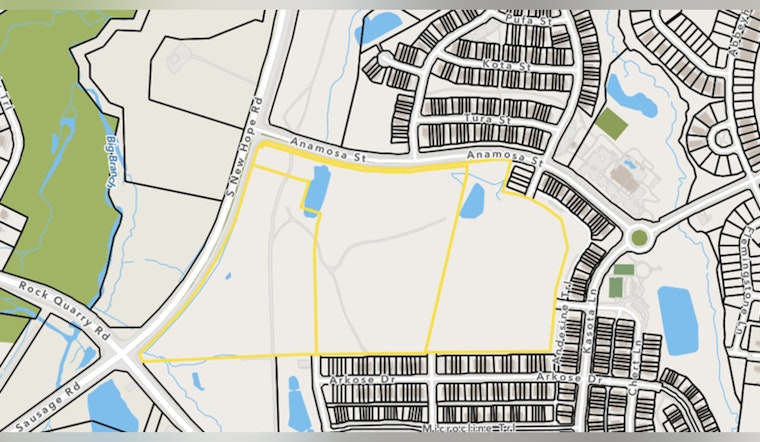
Raleigh City Council on Tuesday unanimously signed off on a rezoning that opens the door to denser housing and a possible grocery store in southeast Raleigh, but neighbors are not convinced the store will ever actually show up. The move covers roughly 54 acres in the Olde Towne area and ties extra residential density to approval of a grocery site plan, letting developers build more units only if a grocer commits. Supporters see a chance to land a full‑service store in a part of the city where residents have long had to drive elsewhere for basic groceries. Skeptics counter that nothing in the fine print forces anyone to build a supermarket.
As reported by The News & Observer, the ordinance lifts an older cap on two‑bedroom apartments, limits building heights to four stories within 150 feet of nearby neighborhoods, and blocks bars, taverns and nightclubs within 250 feet of existing communities. The rezoning authorizes up to 625 homes if a grocery site plan is approved, but only 450 units can be built before that plan is filed. Council members voted unanimously on Tuesday to adopt the conditions, according to the paper.
What the zoning actually requires
City documents for rezoning case Z‑014‑25 spell out a phased approach that makes a grocery the key to unlocking higher density. The filing shows that about 75,000 square feet of nonresidential space can go up before a grocery plan wins approval, with the maximum rising to roughly 210,000 square feet afterward, according to the City of Raleigh. The application names OT Retail East Company LLC, LoBro LLC and Olde Towne Row LLC as the property owners. It also removes the two‑bedroom limit on apartments and adds open‑space requirements and step‑down height limits near existing homes, according to the filing.
Neighbors say a grocery isn’t guaranteed
Nearby homeowners told council members they want a store as much as anyone, but worry the conditions give developers plenty of leeway to build housing even if a grocer never bites. "We really do want this grocery store, but it shouldn't come at the expense of everybody living in that area," Zainab Alidina, president of a homeowners association, said in comments reported by The News & Observer. Other residents, including Katie Lee, said they doubt developers will follow through and described the rezoning as more of a delay tactic than a firm path to a supermarket.
Why a store might still be far off
Rezoning can clear the path for growth, but it does not sign lease deals with grocery chains. Grocers typically want solid commitments and clear market signals before making big, expensive moves. The long‑running Latta Park project in north Durham is one example: it needed a multi‑year rezoning and other approvals before a Publix finally moved toward opening there. Developers told WRAL that the rezoning process alone took nearly three years. Given how selective grocery anchors can be, planners and neighbors say the conditional approvals may speed up the opportunity without actually guaranteeing a store.
What comes next
For a grocer to materialize, the property owners will have to submit a grocery site plan and secure city approval. Only then do the higher residential and commercial maximums kick in. City staff will review any site plan to make sure it matches the rezoning conditions, and state permitting will follow after that. Even in a best‑case scenario, the timeline for a supermarket, if one comes at all, is likely to be measured in years, not months. Council members framed their vote as a compromise that could bring long‑sought amenities, but as the meeting wrapped, residents were still asking the same question: will a grocery actually get built, or will the neighborhood be left holding a bag with no store in sight?





