

























































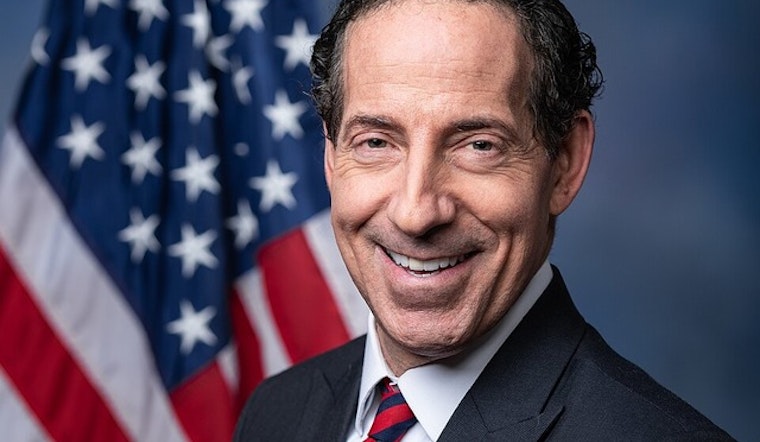
Rep. Jamie Raskin is moving to test one of the Constitution's most dramatic emergency tools, rolling out a bill Tuesday that would let Congress formally examine whether President Donald Trump is still fit to do the job under Section 4 of the 25th Amendment. Raskin, the ranking Democrat on the House Judiciary Committee, is pitching the plan as a continuity-of-government safeguard that would create a standing commission of experts ready to conduct a rapid medical review if Congress orders one. He says the move is warranted as Democrats grow increasingly alarmed by the president's recent rhetoric and public statements.
What the bill would do
The proposal would set up a "Commission on Presidential Capacity to Discharge the Powers and Duties of the Office," a 17-member panel appointed by congressional leaders and by jointly selected former executive branch officials and medical professionals. If both chambers pass a concurrent resolution directing it to act, the commission could order a medical examination of the president, then send its findings to congressional leaders. In any transfer of power, the vice president remains the decisive backstop. Raskin filed the measure with roughly 50 House Democratic co-sponsors, according to House Judiciary Committee Democrats.
How the commission would work
The bill lays out in fine print who gets a seat on the panel and how quickly it must move. Most members would have to be physicians or former high-ranking executive branch officials, and each party's leaders in the House and Senate would control specific appointment slots. Once Congress gives the order, the commission would have 72 hours to conduct a medical examination of the president and another 72 hours to deliver a written report. That report must include the formal Section 4 declaration described in the Constitution. Those procedural details are spelled out in the text posted on DocumentCloud.
How Section 4 actually works
Section 4 is the part of the 25th Amendment that kicks in when a president is deemed unable to do the job but cannot or will not step aside. It lets the vice president and a majority of the Cabinet, or "such other body as Congress may by law provide," send a written declaration to Congress saying the president is unable to discharge the powers of the office. At that moment, the vice president immediately assumes the powers of the presidency. If the president disputes that judgment, the vice president and the majority can reassert it, and Congress gets a set period to decide the issue. Making the removal permanent requires two-thirds votes in both the House and the Senate. A straightforward breakdown of those mechanics is available in the Congress.gov Constitution Annotated.
Reaction and politics
Raskin's bill landed after a spike in Democratic agitation over Trump's threatening social media posts about Iran. More than 70 lawmakers went public urging either impeachment proceedings or some kind of 25th Amendment response, according to NBC News. Party brass, however, are keeping their options open. House Minority Leader Hakeem Jeffries said on MSNBC's "Morning Joe" that "we've ruled nothing out and we've ruled nothing in," a line his office later highlighted on its website. The legislation itself lists roughly 50 House Democratic co-sponsors, per the rollout from House Judiciary Committee Democrats.
Why it is a long shot
Even if the measure clears the Democratic side of the House, its prospects are rough. Republicans control Congress, the president could veto the bill, and any temporary handoff of power still depends on the vice president signing off. If a president fights a commission finding, Congress would have to step in and, after a fixed period, vote by two-thirds margins in both chambers to make the removal stick. Those stacked hurdles are why the proposal is being treated as a long shot for now, as Axios reports.
Raskin is essentially reviving a blueprint he first floated in 2020, putting the mechanics of a Section 4 process back on the table as House Democrats argue over how far to push accountability. For the moment, the bill functions less as a trigger and more as a detailed playbook for how Congress could actually put the 25th Amendment into motion if leaders ever decide to go that route.



