

























































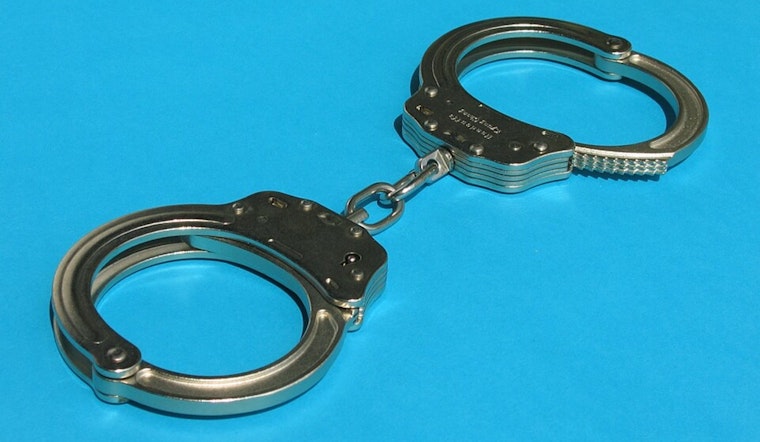
Deputies say a quick stop for a smoker on the CTA Red Line turned into a gun arrest Thursday night, after Cook County Sheriff's Police pulled a 25-year-old man from a train car and found he was carrying a loaded handgun.
Officials said the man, identified as Angel Williams, had a valid Illinois concealed-carry license but was still charged with unlawful possession of a weapon under state law. The Cook County State's Attorney's Office approved the charges, and Williams was ordered released the next day following his initial court appearance.
What Happened on the Red Line
The Sheriff's Office laid out the basics in a social media post, saying deputies were doing "premise checks" on a Red Line car around 7 p.m. Thursday when they spotted a rider smoking and escorted him off at the 69th Street station.
Once on the platform, deputies recovered a loaded handgun, according to the office. Officials identified the rider as Angel Williams and said the Cook County State's Attorney's Office signed off on charges of unlawful possession. Court records show Williams appeared at the George N. Leighton Criminal Courthouse and was released the following day.
What the Law Says About Guns on Transit
Even with a valid license, carrying a gun on Chicago trains is a legal no-go. Illinois law bars concealed-carry licensees from bringing firearms onto buses, trains, or any property controlled by public transit agencies, and courts have repeatedly backed that rule.
A Justia summary of a Seventh Circuit decision explains that Section 65(a)(8) of the Firearm Concealed Carry Act covers public transportation and notes that a first violation can be charged as a Class B misdemeanor. That level of offense is punishable by up to six months in jail and a fine, underscoring that a concealed-carry license does not automatically authorize riders to bring a loaded handgun onto a CTA train.
CTA Rules on Smoking and Enforcement
The Chicago Transit Authority does not mince words on smoking: it is banned on vehicles and at stations, whether it is cigarettes or vaping.
The agency says it teams up with law enforcement on targeted "anti‑smoking missions" to remove violators and issue citations. Chicago Transit Authority materials frame smoking as both a rider-experience problem and a public-health concern, and they encourage riders to report incidents so security staff and deputies can step in.
Officers' Patrols Have Led to Other Recoveries
The sheriff's office has highlighted a string of similar finds in recent months. One case in March involved deputies who reported recovering a loaded handgun during a stop on the 87th Street Red Line platform, a story that local outlets picked up at the time.
Coverage tracked by often seizes firearms during traffic and transit-related stops shows sheriff's police regularly encounter guns during both traffic and transit enforcement.
What Comes Next
With charges approved, the Cook County State's Attorney's Office will move the case through arraignment and any pretrial hearings at the Leighton courthouse. Prosecutors will decide whether to pursue any enhanced counts or specific detention requests based on the evidence as it develops.
Williams, like any defendant, is entitled to legal counsel and the presumption of innocence while the case plays out. Future court filings or a formal release from prosecutors will outline any updated charges and upcoming hearing dates.
In its post about the arrest, the sheriff's office included its standard reminder that "defendants are presumed innocent until proven guilty in a court of law" and urged riders to flag problems to transit staff or deputies. Riders with safety concerns or tips can contact CTA customer service or local law enforcement for help.





