

























































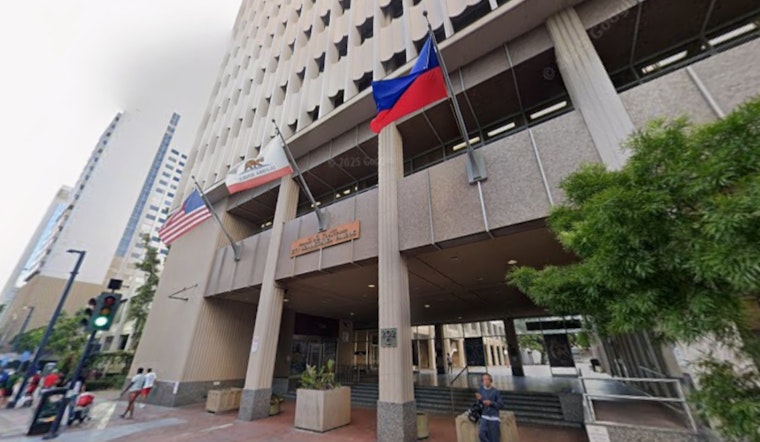
San Diego City Hall is quietly weaving generative AI into daily business, from records handling to service requests to small-business cybersecurity. Officials say the early pilots are about killing off some of the routine paperwork and speeding up responses, while critics are watching closely for problems around privacy, data sharing and accountability. For now, city leaders stress that people, not software, still make the final call on anything AI suggests.
AI on the council agenda
An informational item titled “Artificial Intelligence Policy, Governance, Risk Management, and Adoption in the City of San Diego” slipped onto several council committee dockets in early March, signaling that the city wants ground rules in place as pilots grow. The listing and accompanying staff materials spell out plans to catalog AI systems and test narrow use cases before anything goes citywide, according to the City of San Diego.
Public-facing cybersecurity chatbot
The city's Cyber Lab already offers My eCISO, a free conversational assistant meant for small businesses that do not have an in-house security chief. The tool interviews owners about their cybersecurity practices, then generates a NIST-based report card with tailored recommendations. The tool, built with regional partners including AWS and local universities, is promoted on the Cyber Lab site as a way to raise security standards across the region, per the City of San Diego.
Copilot pilot and internal testing
Behind the scenes, city staff have been experimenting with productivity copilots and other generative assistants inside internal systems and document workflows. The city has also hired a vendor to help launch Microsoft Copilot as a formal pilot. Documents reviewed by Axios show San Diego agreed to pay Planet Technologies roughly $300,000 in 2024 for that rollout, and CIO Jonathan Behnke has described using Copilot and Google Gemini for everyday tasks while training models from multiple cloud vendors to search and summarize intranet content. Axios also reports that the city is exploring ways AI could speed up public-records processing, help with redactions, transcribe meetings and triage non-emergency calls, with humans required to review every AI output, according to Axios.
Experts urge training and transparency
Ebrahim Tarshizi, academic director of USD’s Applied Artificial Intelligence program, argues that city workers will need ongoing, hands-on training instead of a one-time workshop as AI tools spread through departments. He has pointed to practical pilots, such as using autonomous vehicles to scan streets for potholes, as realistic near-term applications rather than science-fiction scenarios. Those comments and the broader guidance are reflected in coverage and program materials, per the University of San Diego and Axios.
Policy guardrails and privacy
Local policymakers are trying to keep the brakes within reach. San Diego County’s AI framework says the government will maintain a public inventory of AI systems, run risk reviews and ensure that a human reviews AI-generated outputs to protect privacy and civil-rights interests. County officials present that framework as a model for agencies that want to test new tools without undermining public records or individual protections, according to San Diego County.
For now, San Diego’s approach looks incremental: limited pilots, public-facing tools like My eCISO and a steady stream of committee briefings that could turn experiments into formal rules. Residents should brace for more demos and hearings as staff decide where, how and how much AI will be allowed to touch everyday city services.



