

























































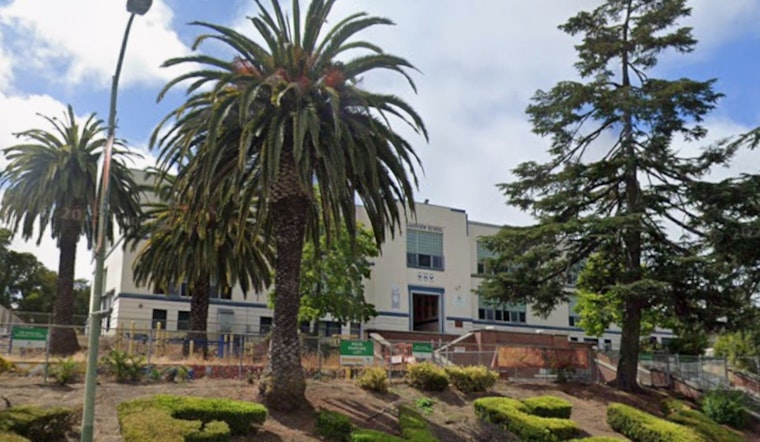
In Oakland Unified, whether you can sit in an Advanced Placement classroom has a lot to do with which campus is on your schedule. Skyline High is loaded with options, offering 17 AP classes, while nine other district high schools report zero AP courses. That imbalance leaves entire swaths of students without in-school access to AP coursework and potential college credit, a pattern that data and educators say closely follows neighborhood lines and long-standing fault lines in the city.
Reporters who combed through course lists and district records found AP options clustered at just a few schools. Skyline offers 17 AP courses, Oakland Technical runs 15, and Oakland High lists eight. At the same time, nine OUSD high schools report no AP offerings at all. The reporting also underscored the price tag: the standard AP exam costs $99, and students who qualify for free or reduced-price lunch may pay a discounted $53, a bill that can still be tough to swallow for many low-income families. These details were documented by The Oaklandside.
How District Data Show Concentration
OUSD’s own data portal and its 2023-24 annual report show that about one-third of 11th and 12th graders are enrolled in at least one AP course across the district, yet most of those seats are packed into a small group of campuses. On paper, roughly 92% of students who take AP classes are earning passing grades in the class itself. Far fewer, however, are passing the College Board exams that actually translate into college credit. Those figures appear in the district’s OUSD data dashboards and its annual report.
Racial And Neighborhood Patterns
The uneven access shows up sharply by race. District-level numbers indicate that Asian and white students are much more likely to land in an AP classroom than their Black and Latino classmates. In OUSD data analyzed by local reporters, about 48% of Asian and white 11th and 12th graders were enrolled in at least one AP course, compared with roughly 23% of Black students and about 21% of Latino students.
At Skyline, the disparities are even more striking. Nearly 80% of Asian students there take at least one AP class, while only about 40% of Black and Latino students do. Those gaps were detailed by The Oaklandside, and they mirror broader debates in Oakland about which students get steered toward the most rigorous courses.
Dual Enrollment As A Parallel Path
For students at campuses with few or no AP classes, the other main route to college credit runs through dual-enrollment courses taught by Peralta Community College District instructors. Students who pass those classes earn actual college units, not just a line on a high school transcript. Statewide and local reporting show that dual enrollment has exploded in popularity in recent years.
The SF Chronicle reports that OUSD recently offered dozens of Peralta-taught classes that enrolled more than 1,600 students in a single term, and that those courses have posted higher pass rates than AP exam pass rates. District leaders and advocates say dual enrollment can quickly widen access to college-level work, although it also takes serious coordination, instructor time and schedule flexibility at each high school.
What Officials Say And What Comes Next
District officials point to Measures N and H, along with investments in Linked Learning, counseling and dual-enrollment staffing, as their main levers for expanding college-readiness opportunities across campuses. The 2023-24 annual report outlines those investments and shows that OUSD is tracking both AP participation and dual-enrollment outcomes as part of its long-term college and career strategy.
Advocates argue that the next phase must include clearer districtwide expectations for how many AP classes should be available at each school and stronger supports so that students who sign up for rigorous courses are better positioned to pass the exams that unlock college credit.
For families and educators, the trade-offs are stark. Concentrating AP classes at a few schools helps some students rack up early college credit, while others are left to chase alternative routes through dual enrollment or to miss out entirely. As OUSD rolls out new funding and program changes this spring, residents and school leaders will be watching closely to see whether those moves narrow the gap or simply rearrange where the hardest classes live in Oakland.





