

























































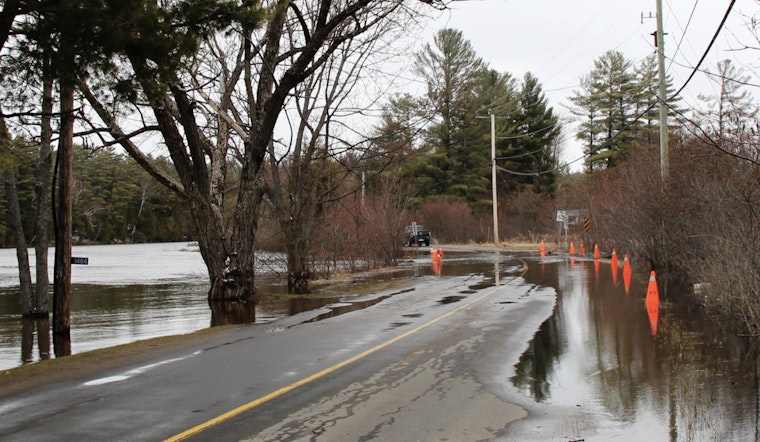
Wisconsin’s future is looking hotter, wetter and a lot more unpredictable, and Milwaukee just got an early preview. A sweeping new climate assessment says the state is sliding into an era of sudden, costly weather extremes, the kind that turned last August’s record‑breaking downpour into a multimillion‑dollar mess.
Co‑directors of the Wisconsin Initiative on Climate Change Impacts, or WICCI, walked the Natural Resources Board through the 2026 assessment on Wednesday, pairing big‑picture projections with what local governments can do right now so they are not bailing out basements and budgets later.
What The Statewide Assessment Found
According to the 2026 assessment by the Wisconsin Initiative on Climate Change Impacts (WICCI), the state is already a different place than it was a few generations ago. Average temperatures have climbed about 3°F since the 1950s, and annual precipitation is up roughly 17 percent. State climatologists and researchers say the 2010s went down as the wettest decade on record, and 2024 ranked as the warmest year in Wisconsin history.
Why Milwaukee Felt It
If those numbers feel abstract, Milwaukee’s August 2025 storm did not. On Aug. 9–10, 2025, storms parked over the city and dumped a verified 14.55 inches of rain in northwest Milwaukee within 24 hours, a new state record, according to the National Centers for Environmental Information. It was the kind of number that looks like a typo until the water is in your living room.
The deluge triggered life‑threatening flash flooding and sewer overflows around the region. The Milwaukee Metropolitan Sewerage District reports that private‑property FEMA assistance for the event alone topped $200 million as residents and businesses ripped out soaked drywall, hauled ruined furniture to the curb and tried to get back to something like normal.
What Scientists Expect Next
Looking ahead, WICCI projects that by the middle of the century Wisconsin could see roughly three times as many extremely hot days as it does now. Winters and springs are expected to grow wetter, while the rhythm of the year tilts toward faster swings between very wet and very dry stretches. The report dubs this pattern “precipitation ping‑pong,” which sounds a lot more fun than it is.
Those shifts add up to more than sweaty summers. Warmer nights mean less relief from heat, longer and more stressful growing seasons for farmers and more roads, culverts and neighborhoods exposed to intense downpours that test infrastructure built for a calmer climate.
Nature‑Based Projects And Local Defenses
The assessment leans heavily on nature‑based solutions alongside the usual concrete and steel. One featured example is the Rush Creek grassland climate‑adaptation effort along the Mississippi River, a roughly 1,000‑acre restoration and reconnection project involving multiple partners. Conservation groups highlight it as a model for how restoring prairies and grasslands can soak up water, buffer floods and support wildlife at the same time.
Closer to Milwaukee, the Milwaukee Metropolitan Sewerage District and county officials point to decades of flood‑management work that helped blunt some of the damage from the 2025 storm, even if it did not feel that way to anyone pumping out their basement. Deep tunnels, green infrastructure and other upgrades kept a bad night from becoming much worse, they argue, while also stressing that more investment is still needed as storms keep intensifying.
Money On The Line
The stakes go far beyond soggy commutes. Wisconsin’s tourism industry generated a record‑high $25.8 billion in economic impact in 2024, according to Travel Wisconsin. In 2022, the state’s agriculture and food‑processing sectors contributed about $116.3 billion to the economy, according to the Department of Agriculture, Trade and Consumer Protection.
WICCI’s agriculture working group warns that climate‑driven heat stress and crop losses could cost that sector on the order of hundreds of millions of dollars every year, a figure highlighted in recent coverage by Wisconsin Public Radio.
The authors of the assessment say there is still a window to dial down the risk, but it is not going to stay open forever. They call for faster moves into renewable energy, low‑carbon building materials and smarter water and land management, and they urge federal, state and local funders to prioritize resilience projects that cut long‑term costs instead of paying to rebuild the same vulnerable places over and over.
For communities on Wisconsin’s urban blocks, farm fields and shorelines, the message is blunt: the kind of weather that used to be rare is quickly becoming the baseline. Planning for the next big storm or heat wave is no longer a theoretical exercise; it is just doing the math on the climate Wisconsin already has.





