

























































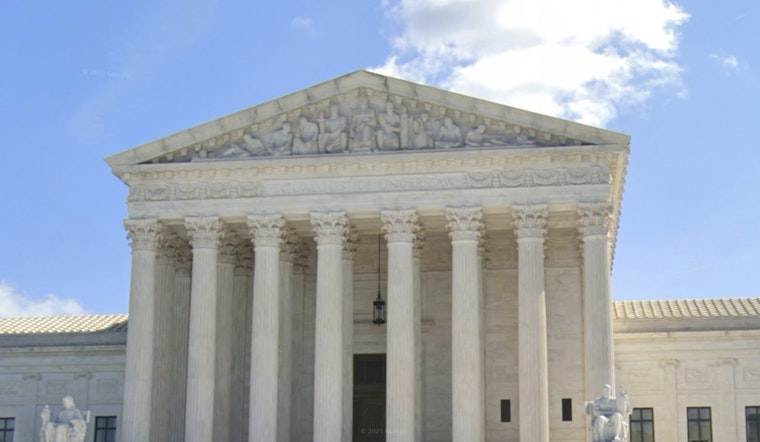
Nearly 200 Democrats in Congress are trying to lock in a legal lifeline for roughly 1.3 million people in the United States, urging the U.S. Supreme Court to keep Temporary Protected Status in place. If the justices buy their argument, deportations could be blocked for about 350,000 Haitians and roughly 6,100 Syrians. In South Florida, where many TPS holders live, communities are watching closely as oral arguments approach on April 29, 2026.
Lawmakers File Bicameral Amicus Brief
The Democrats made their move on April 13, 2026, filing a bicameral friend-of-the-court brief in the consolidated Miot v. Trump matters. The document carries the signatures of 26 senators and 157 representatives, for a total of 187 members, according to Rep. Debbie Wasserman Schultz's office. Their message to the justices: keep TPS protections in place and rein in what they argue is an administration that has pushed past the limits set by Congress.
The brief, which is now docketed on the Supreme Court website, walks through legal precedent, legislative history and policy implications in an effort to convince the court that the program should remain intact.
What Lawmakers Said
In rolling out the filing, South Florida Rep. Debbie Wasserman Schultz did not mince words. "Haiti is overrun by criminal gangs," she wrote in the announcement accompanying the brief. Rep. Ayanna Pressley warned that ending Haitian TPS would be "cruel and life‑threatening."
On the Senate side, Sen. Ed Markey called Haiti's humanitarian situation "dire and worsening," while Sen. Chris Van Hollen blasted what he described as a "politically motivated" agenda by the administration. That same language threads through the brief, which leans on those descriptions to argue that the Supreme Court should take a hard look at how TPS decisions are being made.
Case Timeline And Stakes
The Supreme Court has added the TPS appeals to its April calendar, with oral argument scheduled for April 29, 2026, according to SCOTUSblog. As reported by The Associated Press, lower courts have temporarily blocked some of the administration's efforts to terminate TPS, and the appeals now before the justices directly affect about 350,000 Haitians and around 6,100 Syrians.
Advocates say what the court decides will not stop there. They argue the ruling could ripple out to an estimated 1.3 million TPS beneficiaries nationwide whose status ultimately rests on how much power the executive branch has to end humanitarian protections.
Policy Context
Since January 2025, the administration has moved to terminate TPS designations for multiple countries, a campaign the Migration Policy Institute says has targeted 13 nations and repeatedly landed in court. Florida, which the filing spotlights as home to the largest TPS populations, is expected to feel some of the sharpest local shocks if protections vanish.
According to WLRN Public Media, local employers could see immediate pressure on health care and elder-care staffing. Advocates also warn that losing work authorization would fracture mixed-status families and pull tens of thousands of workers out of the labor market at once.
Organizers Mobilize
On the ground, advocacy groups and TPS holders are not waiting quietly for the justices to rule. The National TPS Alliance says rallies, legal filings and organizing efforts ahead of oral argument are meant to keep the human toll front and center as the legal fight plays out.
The Supreme Court docket shows a crowded field of outside voices weighing in, with labor unions and humanitarian organizations filing amicus briefs to offer sector-specific and local perspective for the justices, according to SCOTUSblog.
What happens after the April hearing is anyone's guess. The justices could resolve the case on narrow procedural grounds or hand down a sweeping opinion that reshapes TPS authority for years to come. Until then, TPS holders, their families and the communities that rely on their labor remain in legal limbo while the country’s highest court decides how far a president can go in pulling back humanitarian protections.



