

























































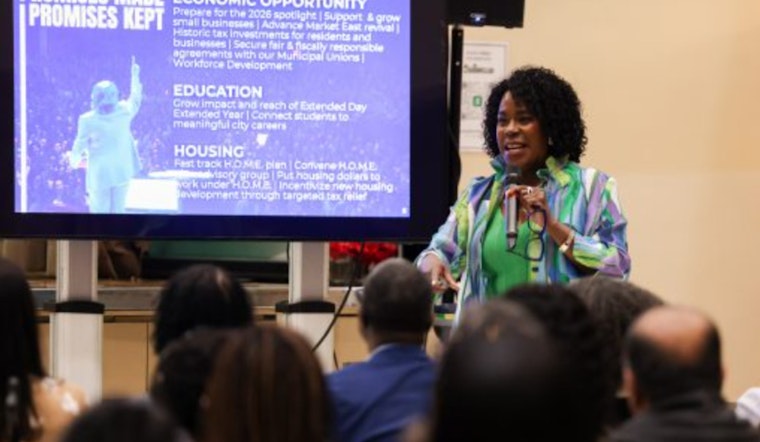
Mayor Cherelle Parker turned the Vare Recreation Center into South Philly’s hottest ticket Thursday night, drawing a standing-room-only crowd for the latest stop in her "One Philly, One Future" budget town hall series. She walked residents through a roughly $6.97 billion Fiscal Year 2027 spending plan and took sharp questions about a proposed $1-per-ride rideshare surcharge that would pump new cash into the School District of Philadelphia.
What the plan would spend
The administration is pitching an FY27 budget of about $6.97 billion, with spending concentrated on public safety, housing, neighborhood cleaning and economic opportunity. According to the City of Philadelphia, the proposal includes about $227 million in new operating investments and $281 million in capital spending, while an earlier breakdown in Parker’s $7 Billion Budget Blitz highlighted planned boosts for shelter beds and other services.
South Philly turnout
Neighbors packed into Vare Recreation Center, not just to listen politely but to press Parker on how those big-city numbers would actually show up on their blocks. As reported by CBS Philadelphia, attendee Frankie Reese said they came to hear directly what the mayor was putting on the table, while James Smith signaled he would support more money for schools as long as the new revenue reliably followed students into classrooms.
The rideshare fight
The biggest flashpoint of the night was Parker’s push to hike the per-ride surcharge to $1 to shore up school funding. The administration and School District project that the plan would generate about $50.4 million a year. According to The Philadelphia Inquirer, that total assumes roughly $48 million from the increased rideshare surcharge and about $2.4 million from a tweak to the use-and-occupancy tax. The School District has said it is staring down an estimated $300 million structural deficit, per the School District of Philadelphia, and the rideshare plan has already drawn a digital ad blitz from Uber and pushback from ride-hail advocates, reporters note.
Next steps
The budget now moves to City Council, where members will hold hearings, grill administration officials and negotiate changes before taking a final vote. The spending plan must be adopted before the new fiscal year kicks off on July 1. According to the City of Philadelphia, the Parker administration expects the continuing neighborhood town halls and council scrutiny to reshape the final package this spring as officials try to balance new investments with the school district’s sizable funding gap.





