

























































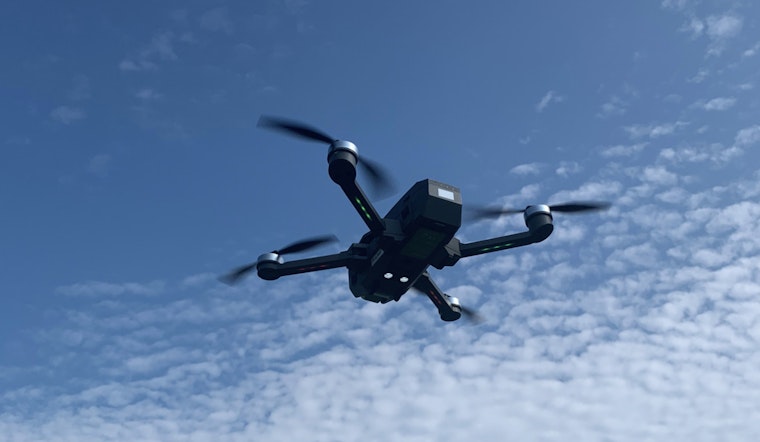
St. Charles County could soon have police drones beating squad cars to some 911 calls, if county leaders get their way. They are asking the county council to sign off on a Drone as First Responder program that would place automated drone docks at partner sites across the county, launching unmanned aircraft to certain emergencies before officers arrive. County officials say the drones would send live aerial video back to dispatch, the county’s real-time intelligence center and officers on the ground to trim response times and improve safety. The setup would rely on memorandums of understanding with schools, municipal buildings and other community partners to host the docking stations and related equipment. The council was scheduled to take up the ordinance at its Monday meeting.
As reported by KMOV, County Police Chief Kurt Frisz outlined the proposal in a memo, and a bill to authorize the program was added to the council packet. According to KMOV, the drones would stream live video to dispatch, the county’s Real-Time Intelligence and Information Center (RIIC) and officers in the field so responders have better situational awareness while an incident is unfolding. The station also noted that nearby O’Fallon already has similar drones in service. County leaders told KMOV they believe the technology could reduce response times and boost safety for both officers and the public.
What the ordinance would authorize
Bill No. 5483 would give the County Executive authority to negotiate and sign memorandums of understanding or similar intergovernmental agreements with selected public and private partners to host and operate drone launch sites, according to St. Charles County. The draft ordinance and attached MOU spell out technical and site requirements, including a 100 Mbps hard-line internet connection, specified power circuits, a minimum 16-by-16-foot launch and landing zone and permanent access to the launch site. The county would cover installation, maintenance and removal costs. An exhibit in the packet names Motorola Solutions and BRINC as implementation partners in the county’s DFR rollout. Supporters say formal agreements would let the county widen coverage by using schools, municipal rooftops and other host sites.
How the drones would work
Under the proposal, drones would sit in automated docking stations and be dispatched to qualifying calls so they can arrive ahead of patrol cars, sending back live video to a staffed control center and officers on scene. As KMOV reported, the county intends to feed those video streams into the RIIC and dispatch to give teams a real-time picture of what they are heading into. Procurement records from O’Fallon show neighboring cities have been buying enterprise drone systems in recent years, reflecting a regional push toward automated launchpads and rooftop docks (City of O'Fallon). Local officials point to speed: in nearby deployments, drones can travel miles and reach scenes in a minute or two, which advocates say is the program’s main edge.
Legal and operational oversight
The ordinance assigns enforcement of the agreements to the St. Charles County Chief of Police and requires compliance with federal, state and local laws, including Federal Aviation Administration rules, according to St. Charles County. The MOU language also clarifies insurance responsibilities, sets the MOU term at one year with automatic renewal unless terminated and allows either party to end an agreement with 60 days of written notice. The bill states that the county will pay for site preparation and will be responsible for acts or omissions tied to county operations, while host sites will not be required to carry insurance for county activities.
Why this matters
Drone-as-first-responder programs have been spreading across the country, and reporting has found they can reshape how 911 calls are triaged while stirring civil-liberties debates over aerial surveillance. The Washington Post’s look at similar efforts noted that agencies often hold community meetings and adopt rules, such as limits on facial-recognition use and bans on audio collection, to address privacy concerns, even as officials credit the technology with faster situational awareness. St. Charles County officials will face those same trade-offs as they decide whether to authorize the MOAs and start building out the dock network.
The ordinance is framed as enabling agreements rather than locking in a fixed rollout, which means the finer points, including how many launch sites are built, which schools or municipal buildings sign on and what operational limits govern flights, are still up for negotiation. County leaders say they will work with partners to place docks and set operational protocols, while critics are likely to push for clear answers on data retention, oversight and public notice. The council’s vote, along with any follow-up community hearings, will be the first real test of whether St. Charles County moves forward with drones as part of its public-safety toolbox.





