

























































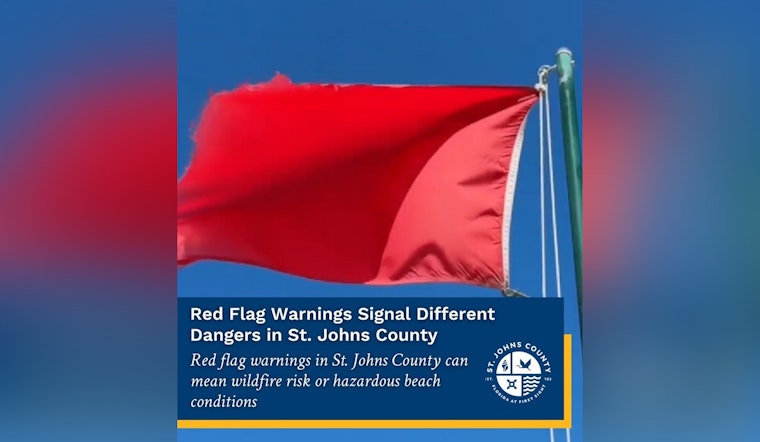
St. Johns County is reminding locals that a red flag in the sky does not always mean the same kind of trouble. In a brief social media alert Tuesday, officials pointed out that residents may see two very different types of red flags this week, from National Weather Service Red Flag Warnings for dangerous fire weather inland to the bright red beach flags that lifeguards raise for high surf and powerful rip currents along the coast.
County Advisory Spells Out Two Kinds Of Red Flag
In its Tuesday post, St. Johns County urged residents to “stay informed” and pay close attention to local alerts, stressing that red flags can point to either inland wildfire danger or hazardous surf at the beach. The county told people to check official updates before lighting any fires, running outdoor equipment or heading into the ocean, so they are not caught off guard by changing fire or surf conditions.
On The Sand, Red Flags Mean Rough Water
Under Florida’s standardized Beach Warning Flag Program, a single red flag signals a high hazard, often strong surf or rip currents, while a double red flag means the water is closed to swimmers. The Florida Department of Environmental Protection explains the statewide flag system and the interpretive signs posted at public beach access points that help beachgoers size up conditions before getting into the water.
Inland, Red Flag Warnings Target Fire Weather
A Red Flag Warning is issued when low humidity, gusty winds and dry fuels combine to create conditions where new fires can spread quickly and are harder to control. The National Weather Service in Jacksonville issues Red Flag and other fire weather products for inland northeast Florida, and the agency has also posted Coastal Hazard and rip current statements this week for the county’s beaches through its watches and advisories feed. Local fire and forestry officials use that guidance along with state tools from the Florida Department of Agriculture and Consumer Services, while dry conditions across much of the state are documented by the NASA Earth Observatory, which has cited U.S. Drought Monitor data showing widespread seasonal dryness.
How To Stay Safe This Week
At the beach, check the flag at your access point, swim near a lifeguard and treat a single red flag as a serious high hazard. If you see double red flags, stay out of the water entirely. Inland, skip outdoor burning and delay spark producing chores during Red Flag conditions, clear dry vegetation away from any machinery and make sure you can quickly contact authorities if a fire starts. Residents are encouraged to keep an eye on county channels and official weather products so they receive real time updates on flags, burn restrictions or any evacuation notices.




