

























































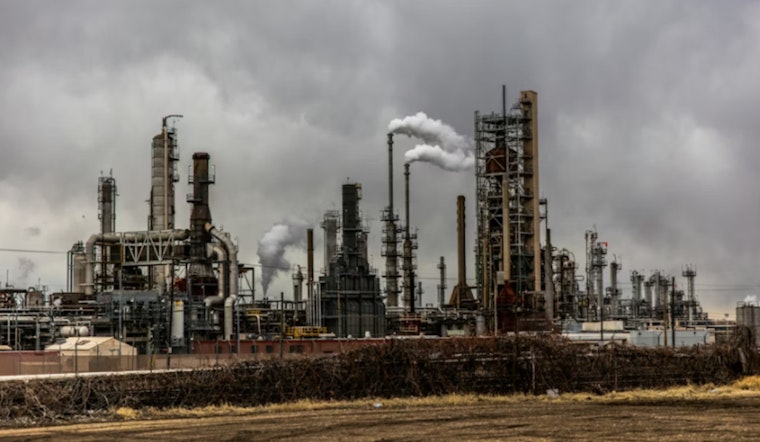
Anyone still betting that new natural gas plants are the bargain bin of the power sector is getting a rude awakening. In just two years, the price tag for building a new combined-cycle natural gas plant in the U.S. has jumped roughly 66%, pushing the typical project cost to about $2,157 per kilowatt by 2025. That run-up is blowing up old assumptions that gas is the cheapest way to add firm capacity and is forcing utilities, regulators and big power buyers to rethink whether to stick with planned plants or chase faster, lower-cost options.
Bloomberg and BNEF figures
Bloomberg reports that BloombergNEF data show average capital costs for combined-cycle gas projects climbed to $2,157 per kilowatt in 2025, up from under $1,500 per kilowatt in 2023. Even with that spike, Bloomberg notes that developers continue to float new gas proposals across the country as they scramble to keep up with surging electricity demand.
What’s driving the spike
BloombergNEF attributes the sharp rise in costs to pricier turbines and other equipment, stressed supply chains and a particularly strong wave of demand from hyperscale data centers that has driven U.S. turbine capital costs higher, according to BloombergNEF. Separate work for data center operators finds that combined-cycle projects can run above $2,200 per kilowatt in real-world build scenarios, adding to the financial pressure on developers and utilities, S&P Global Market Intelligence reported.
Planners say assumptions lag real costs
GridLab finds that many public planning datasets are still stuck in the past, understating today’s market prices while component costs push combined-cycle capital needs into the $2,000 per kilowatt range. The American Public Power Association has relayed those findings to its members. “From construction to fuel to pipeline costs, the cost of new gas is rising,” GridLab Executive Director Ric O’Connell told American Public Power Association.
Renewables and storage change the economics
At the same time, BloombergNEF’s Levelized Cost of Electricity analysis shows battery storage project costs hitting record lows in 2025 while the LCOE for combined-cycle gas plants moves higher, according to BloombergNEF. In many markets, that shift strengthens the business case for solar paired with batteries, a combination that may now undercut new gas where storage can be rolled out more quickly and with less capital risk.
What regulators and utilities face next
Federal baseline models and techno-economic tools still tend to treat gas plant construction costs as relatively stable inputs. Yet guidance from the Department of Energy and the National Energy Technology Laboratory flags major uncertainty around capital cost estimates and turbine delivery times that can significantly change project economics, according to NETL. That backdrop points to updated integrated resource plans, tighter contingency budgets and growing interest in modular clean energy options as planners try to bring their spreadsheets in line with on-the-ground prices.
The rapid rise in gas plant construction costs is raising the stakes for long-term planning and ratepayer exposure, and it could speed up a pivot toward renewables-plus-storage in parts of the country. From Washington to Houston, regulators and utilities will be scrutinizing project bids and turbine lead times as they decide what to build next.





