

























































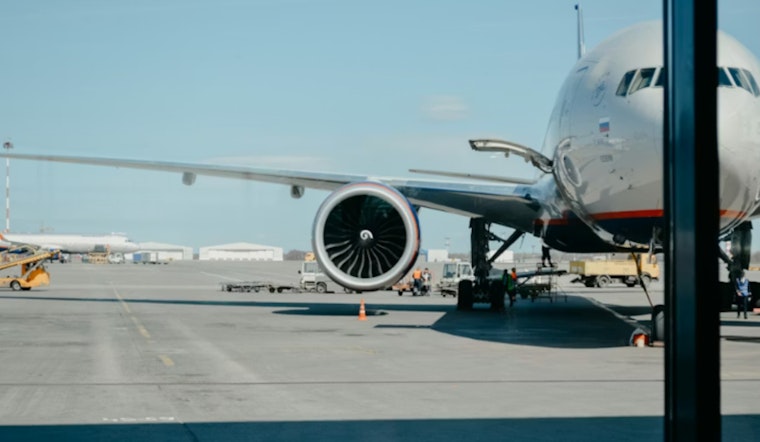
Storms rolling through the Washington region on Wednesday evening triggered an abrupt timeout for air travel, with inbound flights to Washington Dulles, Reagan National and Baltimore/Washington International temporarily halted. Airlines began holding Washington-bound planes at their origin cities while air traffic managers worked to keep jets out of lightning and high-wind cells, and delays at all three airports quickly started to pile up, as per NBC Washington.
FOX 5 DC reported that ground stops for the Washington-area airports were issued between about 4:40 p.m. and 4:45 p.m., with an initial update time set for 6 p.m. The holds forced carriers to pause departures headed for the region, creating a chain reaction of schedule disruptions for travelers trying to make connections down the line.
This was the third regionwide hold in recent weeks. NBC Washington reported a March 27 stoppage tied to an operational problem at the Potomac Consolidated TRACON, and the Associated Press documented an earlier March 13 halt after a "strong chemical smell" at the same control facility temporarily impeded controllers' work. Those recent disturbances have left a lingering backlog that can magnify the impact of even short weather-related holds.
How ground stops work
Ground stops keep flights bound for an affected airport parked at their departure points until restrictions are lifted, instead of sending more planes into airspace that may be unsafe or too congested to handle them. The National Business Aviation Association's Traffic Flow Management glossary describes ground stops as a short-term tool used for thunderstorms, runway closures or equipment outages; once the immediate hazard clears, the Federal Aviation Administration often switches to a ground delay program that meters arrivals into the airport. NBAA's glossary is a useful primer on how the two programs differ.
What travelers should expect
Delays are likely to stretch into the evening as airlines work to reposition aircraft and crews, since even brief ground stops can ripple through multi-leg itineraries and lead to cancellations. Passengers should check airline apps, booking confirmations and the Federal Aviation Administration's Federal Aviation Administration for real-time updates before heading to the airport. If your flight is canceled or significantly delayed, contact your carrier about rebooking or possible waivers, and hang on to receipts for any out-of-pocket expenses.





