

























































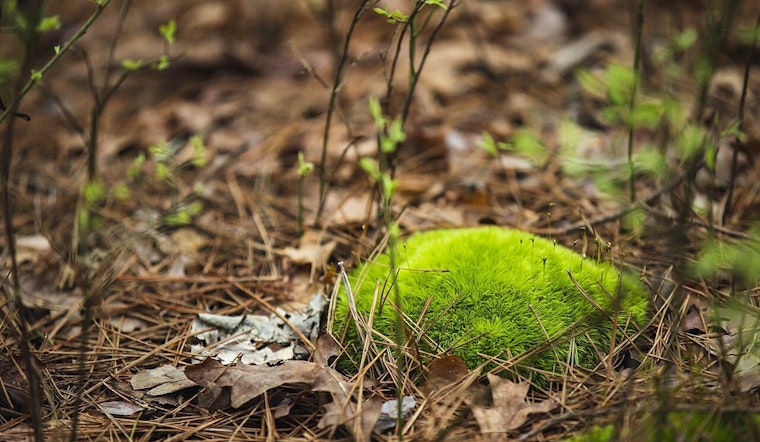
A scrap of moss no bigger than a fingernail helped crack one of the Chicago area’s most disturbing cemetery scandals. Pulled from a tangle of reburied remains at Burr Oak Cemetery, that green speck became a crucial piece of scientific evidence. Botanists say microscopic analysis and lab work turned it into a kind of natural timestamp, showing that graves were disturbed during the period when the defendants were on the job. A new scientific account details how plant science quietly backed up prosecutors in a case that still weighs heavily on families and the community.
How scientists turned moss into a timestamp
In a paper in the journal Forensic Sciences Research, lead author Matt von Konrat and colleagues walk through how that fragment was turned into evidence. First they identified the specimen as Fissidens taxifolius, then used chlorophyll-fluorescence measurements to estimate how long the moss had been buried. By matching the sample against fresh moss and museum specimens with known ages, the team concluded it had likely been underground only a year or two. That relatively tight window clashed with the defendants’ claims that any grave disturbance happened before they worked there, and the lab results gave prosecutors a quantitative timeline to put in front of jurors.
Field Museum matched the microscopic clue
The moss sample arrived at the Field Museum in 2009, where von Konrat compared it with dried herbarium specimens and international reference collections before confirming it as common pocket moss, Fissidens taxifolius, according to the Field Museum. Both the museum account and the paper note that parts of the moss were still physiologically active, a small but critical detail that made it possible to estimate how long the plant had been buried. “People lie, but moss does not,” von Konrat told reporters, a line the authors use to argue that bryophytes deserve a regular spot in the forensic toolkit alongside more familiar plant evidence.
Backstory: the Burr Oak scandal
The Burr Oak scheme first came to light in 2009, when tips and searches revealed that graves had been dug up, remains discarded in a mass unmarked area, and burial plots sold again to unsuspecting families. Two brothers, Keith and Terrence Nicks, along with other cemetery employees, were eventually charged and convicted in a series of prosecutions that wrapped up in 2015, when some defendants received prison sentences, as reported by CBS Chicago. Prosecutors built their cases with a mix of witness testimony, recovered remains, and the botanical and forensic findings that made it into the courtroom record.
Scale of the desecration
Cook County Sheriff Tom Dart described the scene investigators uncovered as horrific. Authorities recovered more than 1,500 bone fragments, tied to what officials estimated were at least 200 disturbed graves, according to FOX 32 Chicago. Those numbers helped prosecutors argue that this was not a paperwork mix-up but a pattern of grave desecration. The moss evidence, along with von Konrat’s testimony, was among the pieces that helped jurors connect the disturbed remains to particular sections of the cemetery.
What it means for investigations
The authors of the Burr Oak paper, along with a companion review, say bryophytes are still a largely untapped resource in forensic investigations, even though mosses can provide both location-specific and time-sensitive clues. A 2025 review in the same journal found only about a dozen documented cases worldwide where moss or other bryophytes were used in a forensic setting, underscoring that the Burr Oak investigation is unusual but instructive, according to Forensic Sciences Research. For local investigators and museum scientists, the aim is fairly straightforward: add one more layer of scientific evidence to help families get answers and give prosecutors another tool when they need to pin down what happened and when.





_on_the_forest_floor_in_Broken_Bow,_Oklahoma.jpg)