

























































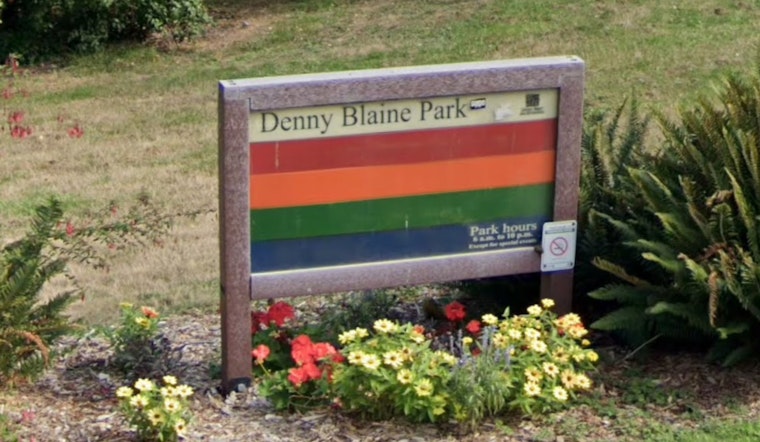
Seattle’s long-brewing fight over Denny Blaine Park is back in court, this time over a very specific question: can women sunbathe topless in the part of the park the city now labels clothing-required? A new legal filing casts the clash as a showdown between decades of queer and naturist use at the small Lake Washington beach and nearby homeowners who want tighter crackdowns. With a hearing set for May 1, the answer could reshape how the city and police handle toplessness at one of Seattle’s most argued-over public spaces.
According to Axios Seattle, Friends of Denny Blaine filed a motion on April 20 asking a King County judge to confirm that simple topless sunbathing is not prohibited in the clothing-required zone. The group says private security hired by nearby homeowners has been “continuously direct[ing] parkgoers to put on a top and report it as a violation to the police,” and warns that pushing for a topless ban could raise gender-equity issues. The motion is scheduled for a hearing in early May, when the court could clarify enforcement rules or leave the city’s existing abatement order in place.
Court history and the city response
The current court fight traces back to 2025, when neighbors sued the city and argued that public sex, drug use and other illegal behavior had turned Denny Blaine into a public nuisance. A King County judge later ruled that nudity combined with lewd conduct could contribute to that nuisance. As reported by The Seattle Times, the judge ordered the city to come up with a plan to curb illegal behavior but allowed the nude beach to stay open at least through the spring.
The City of Seattle’s parks page describes what happened next: officials split Denny Blaine into clearly marked clothing-optional and clothing-required areas, installed new signage and visual barriers, and boosted Park Ranger staffing in an effort to address the conduct flagged in court.
What the motion argues
The new filing emphasizes that the 2025 order targeted “nakedness associated with public sex acts and masturbation,” not quiet topless sunbathing, and asks the judge to spell out where enforcement should actually start. Axios Seattle notes that the motion raises concerns about uneven enforcement and about private guards hired by neighbors who have been reporting topless sunbathers to police.
State law draws a similar line. The statute cited in the case, Washington Legislature, defines “open and obscene exposure” that is likely to cause affront or alarm as a crime, but does not frame nonsexual nudity the same way. That distinction is expected to be a central point of debate when attorneys return to court next month.
Neighbors, stewards and lingering tensions
Regular sunbathers and Friends of Denny Blaine say the beach community has largely policed itself and that most serious problems are outliers. Neighbors counter that the city’s changes still have not fully addressed reported lewd behavior. KUOW detailed the city’s installation of a four-foot privacy fence, additional signage and stepped-up ranger patrols following the judge’s abatement order, steps supporters say helped and critics dismiss as falling short.
Adding to the friction is a 2023 proposal to install a playground in the park, backed by a $1 million donation later tied to a nearby homeowner. The idea never stopped being a sore spot and helped set the stage for the current stalemate over who gets to define “appropriate” use of the shoreline.
What to watch at the May 1 hearing
At the May 1 hearing, the judge could clarify that nonsexual toplessness is allowed in clothing-required zones, narrow the city’s abatement order, or give neighbors fresh enforcement tools. Any of those outcomes would affect how parks staff and police respond to future complaints.
Attorneys are expected to square off over whether earlier findings about lewd conduct can be stretched to cover basic topless sunbathing and whether any rules can lawfully treat one sex differently from another. For park regulars and nearby residents alike, the next court round will test how Seattle balances a long-standing beach culture with demands for order and safety along the lake.





