

























































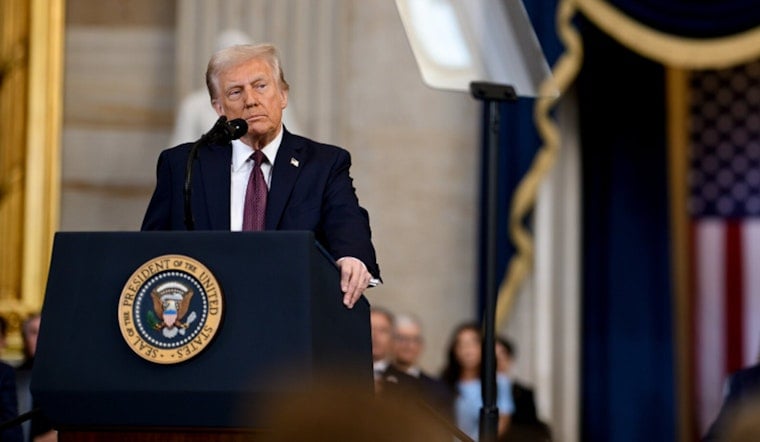
President Donald Trump is considering whether to stretch out a temporary waiver of the Jones Act that has let foreign-flagged tankers move fuel and other energy products between U.S. ports. The 60-day suspension, issued in mid-March, opened up routes from Gulf Coast refineries to markets on the East Coast, West Coast and Alaska. Administration officials say the waiver has sped deliveries into tight regional markets, and the question now is whether to keep that exception running past the current cutoff.
As reported by Axios, the White House has discussed leaving the waiver in place and has shared figures showing that roughly 40 tankers have already moved about 9 million barrels under the temporary rules. An adviser told the outlet the president “likes what he sees,” although officials have not signed off on any extension.
How the Waiver Works
According to Customs and Border Protection, the waiver was issued on March 17 and covers a 60-day period that ends at 11:59 p.m. Eastern on May 17, 2026. CBP’s implementation bulletin details filing and reporting rules for foreign-flag vessels operating under the waiver and specifies that cargo must be laden before the deadline in order to qualify.
Industry and Labor Pushback
Maritime operators and unions are not exactly cheering the move. The American Waterways Operators warned that the broad exception “puts both [supply chain reliability and national security] at risk,” while the AFL-CIO blasted the waiver as “unnecessary and ineffective,” arguing it could shift work to foreign, nonunion carriers at the expense of American mariners.
What It Means for Prices
Analysts are not expecting a major break for drivers. The Seafarers International Union pointed to a Navigistics Consulting estimate that the waiver would likely trim U.S. gasoline prices by only about $0.0027 per gallon in a best-case scenario. Reporting by AP News also notes that global market turmoil tied to the Iran war limits how much a tweak to domestic shipping rules can move what people pay at the pump.
What Happens Next
White House spokesperson Taylor Rogers told Axios that “no final decisions have been made” about an extension, which leaves the administration with a firm decision point as the CBP deadline approaches. Reuters reported that officials are weighing whether to keep the waiver going in an effort to soften energy price shocks. Any move to extend it is likely to draw fresh scrutiny from lawmakers and labor groups who insist the Jones Act is a bulwark for U.S. maritime jobs.





