

























































Tukwila’s fusion scene just scored a serious boost. Avalanche Energy has landed Pentagon funding to build a new class of ultra-dense “nuclear batteries” that could power electronics for months without a resupply run. For a company that talks about fusion as something small and portable instead of a hulking power plant, the deal is a move from lab promise toward hardware that might actually ship.
The contract also links Avalanche’s near-term radioisotope work to its longer-term ambition: compact fusion devices that fit where traditional reactors never will.
In a press release from Avalanche Energy, the company said it was awarded roughly $5.2 million under DARPA’s Rads to Watts program. The money will fund development of solid-state, micro-fabricated alpha-voltaic cells that turn alpha particles from radioisotopes directly into electricity. Over 30 months, Avalanche is expected to validate the underlying physics and build a power-producing prototype that can shrug off high radiation doses while delivering more than 10 watts per kilogram in harsh environments.
Local tech coverage has filled in some real-world details. GeekWire reported that Avalanche’s materials-science lead described a target device that could power a laptop-class system for months while weighing about 10 pounds. According to that reporting, Avalanche will lead a multi-institution team that includes Caltech, the University of Utah, Los Alamos National Laboratory and McQuaide Microsystems.
What DARPA Is After
DARPA’s Rads to Watts program is not about sci-fi reactors so much as squeezing more usable power out of radioactive decay. The agency’s 30-month solicitation focuses on radiovoltaic technologies that combine high specific power with materials and architectures that can tolerate intense radiation.
The effort is broken into a base period with follow-on option periods, all built around hard metrics. As outlined in DARPA’s program solicitation, teams must show sustained power density and minimal degradation under heavy cumulative radiation exposure to stay in the running.
How This Fits Avalanche’s Roadmap
The DARPA award arrives alongside a funding push and test-facility expansion that Avalanche says will speed how quickly it can iterate new hardware. Built In Seattle reported that Avalanche raised $29 million in February to scale up its FusionWERX test site and advance its Orbitron micro-fusion program.
In public statements, the company has cast government contracts and venture backing as two halves of the same play: build toward manufacturable, compact fusion systems for defense, space and remote infrastructure, using nearer-term radioisotope tech as both proving ground and revenue bridge.
Local Footprint
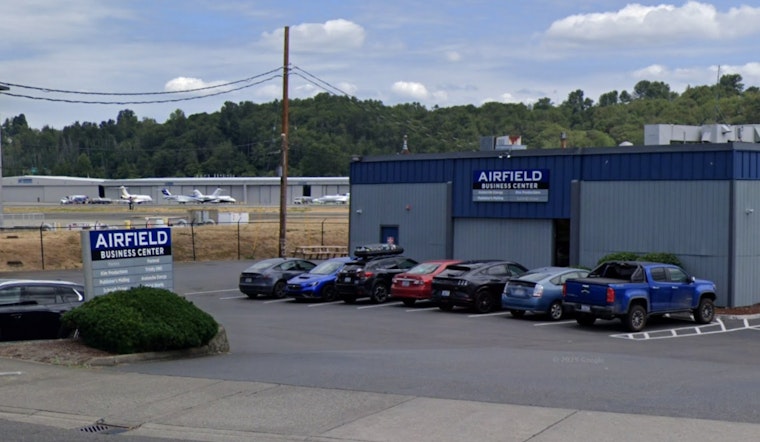
Federal award records and SBIR listings tie Avalanche’s operations squarely to the Tukwila area, underscoring the Pacific Northwest’s growing role in fusion R&D. Public SBIR award pages list a Tukwila address at 9100 E Marginal Way S and show earlier Navy and NSF awards that the company used to develop its Orbitron concepts. SBIR.gov provides additional details on those prior government research grants.
Why It Matters
Beyond the hometown bragging rights, the contract is a signal flare for what the Pentagon wants next: power systems that sit between throwaway chemical batteries and full reactors, especially for space missions, remote bases and autonomous platforms where resupply is a costly fantasy.
Defense observers note that the early work will zero in on materials durability and conversion efficiency rather than field deployments. That leaves a big open question about how any lab success translates into commercial offerings or larger fusion power systems. The Defense Circuit places Avalanche’s award inside a broader wave of defense and private investment flowing into compact fusion and isotope production.





