

























































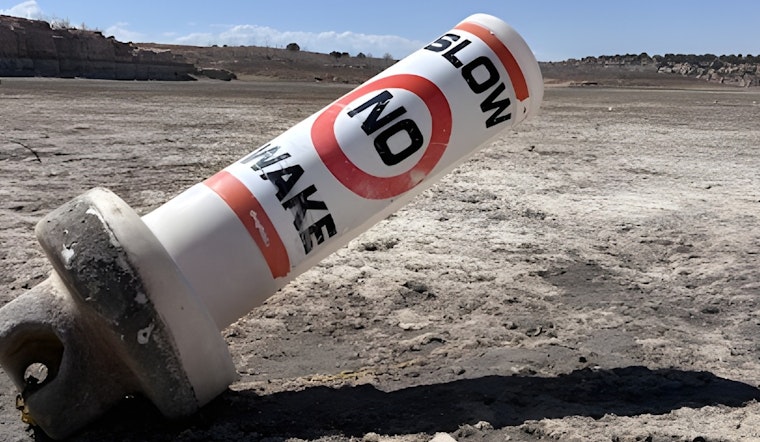
Two Buttes Reservoir in southeast Colorado has effectively disappeared, leaving buoys and a boat ramp marooned on cracked mud just as spring is getting underway. The 700-acre prairie lake’s sudden loss of water forced managers to cut short a public fish-salvage order once the reservoir went completely dry, a jarring scene for early April and a very public symbol of how drought is squeezing eastern Colorado communities this year.
In a Facebook post on April 9, Gov. Jared Polis shared Colorado Parks and Wildlife photos of the dry lake bed and remarked that “it shouldn’t look like this in early ‘rainy’ April,” putting a statewide spotlight on the loss of a local recreation hub. As seen in Gov. Jared Polis on Facebook, the stark images boosted state wildlife officials’ warning about worsening drought in southeast Colorado.
CPW Rescinds Fish-Salvage Order After Reservoir Dries
Colorado Parks and Wildlife announced that it has called off an emergency fish-salvage order at Two Buttes Reservoir after the lake “dried completely,” putting fishing on hold for now, according to Colorado Parks and Wildlife. The agency explained that Two Buttes depends on occasional runoff pulses from Two Buttes Creek, an intermittent stream that only carries water when storms happen to track across the plains in just the right way.
Photos And Local On-The-Ground Description
“Two Buttes Reservoir is an excellent fishery, and when stocked, fish grow quickly in its highly productive waters,” CPW aquatic biologist Jim Ramsay said in the agency release, which also points out that nearby Black Hole Pond still holds water for anglers who make the trip. CPW press photos from March 24 show the concrete boat ramp high and dry above the basin, along with fishing gear abandoned where the shoreline used to be, capturing what the agency bluntly described as an emptied reservoir.
Why This Matters For Communities
Local reporting has zeroed in on the human details of the loss, noting lifeless buoys, a rusty lawn chair and scattered lures left behind in the dust, underscoring both the recreational hit and the economic sting for nearby towns, as Colorado Springs Gazette (KOAA) reported. The dry conditions at Two Buttes follow an unusually warm winter and a very small mountain snowpack that limit the kind of spring runoff prairie reservoirs depend on to refill, according to the USDA Natural Resources Conservation Service.
Short-Term Outlook And What Could Change
Forecasters and drought analysts say that wetter weather in early April may bring some short-term relief to parts of the southern Plains, but they caution that a single storm cycle is not nearly enough to make up for the deeper moisture deficits, according to the National Integrated Drought Information System at Drought.gov. CPW staff and local managers note that Two Buttes can, in theory, come back quickly if a strong and well-aimed runoff event hits the narrow drainage that feeds the reservoir, although they stress that such refills are episodic and unreliable.
Hoodline previously followed the story when CPW tried to get ahead of the problem last fall; see our earlier report on CPW's emergency fish salvage in October 2025, when managers were already working to preserve fish stocks before water levels crashed.
For now, the cracked and seeded reservoir bed stands as a direct, in-your-face reminder of how warm, dry winters and low snowpack can erase local water recreation and strain already stressed ecosystems. An editor’s note on the CPW release said the agency carried out aerial seeding of the nutrient-rich lake bed on March 18 to benefit terrestrial wildlife while the basin is empty, and managers say the site will stay dry until meaningful runoff finally returns.




