

























































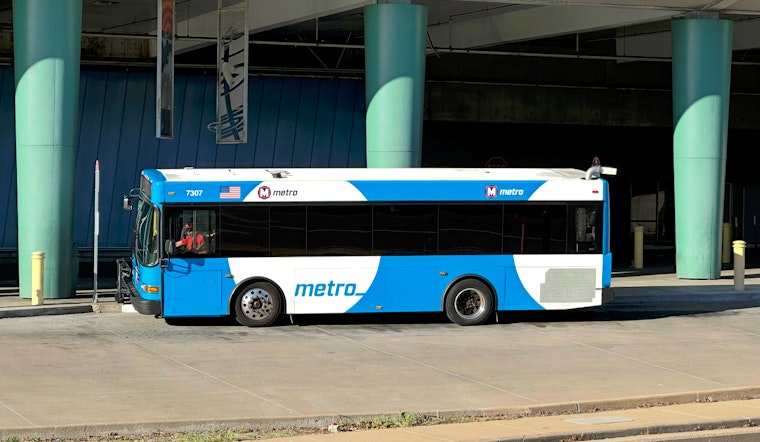
Via Metro STL has quietly turned into a major new player in how St. Louis County gets around, with Bi-State Development and rideshare operator Via pushing the on-demand vans into fresh corners of the county this spring. The idea is simple enough: fill in the holes where buses and MetroLink do not go, at a price people can actually afford.
The microtransit program now covers three distinct pockets of St. Louis County and is currently backed by roughly $6.34 million to keep the contract running through May 31, 2026, according to Bi-State Development. Agency figures show a fleet of about 50 branded vans completing around 24,000 to 25,000 rides a month, a massive jump from the roughly 2,000 monthly rides logged in the program’s first year. That growth has drawn praise from some riders and experts, and alarm from elected officials who warn microtransit should not quietly become a stand-in for regular bus service.
How the service works
Via Metro STL operates like a shared, tech-enabled shuttle. Riders can request minivans within three specific service zones in North, West and South St. Louis County, with trips capped at seven miles and fares set at $2, according to Via Metro STL. The app directs people to virtual bus stops where riders are grouped so drivers can pick up several passengers in one run.
The service includes wheelchair-accessible vehicles and a phone booking line for anyone who does not use a smartphone. Via describes the system as a lower-cost connector to Metro’s fixed-route buses and trains, not a one-for-one replacement for those routes.
Funding and usage numbers
In March operations materials, Bi-State staff asked the board to sign off on a one-year extension for Via “for the continued operation of microtransit service” at a cost not to exceed $6,344,000, with the money already accounted for in the FY2026 operating budget, according to Bi-State Development.
The same briefing reports that Via has delivered more than 750,000 completed rides since the program’s launch in June 2020. Recent months have seen completed trips in the mid-20,000s, a level Metro characterizes as cost-competitive for areas where traditional fixed-route service would struggle to attract enough riders. The materials also spotlight Via’s role in taking on overflow from Metro’s paratransit system and outline Metro’s plan to run a competitive procurement process for longer-term microtransit operations later this year.
Local response: praise and pushback
Transit consultants and some riders see microtransit as a handy feeder system that can help people reach higher-capacity bus and rail lines, as long as it is planned with that in mind. Others are far less impressed, arguing that on-demand vans coincided with the hollowing out of full bus routes when service was cut during the pandemic.
St. Louis County councilwoman Shalonda Webb has been one of the sharpest critics, calling Via’s growth a “bait-and-switch” and pointing out that the service expanded in areas where bus lines had been reduced. Riders, she argues, are turning to Via largely because they no longer have other realistic choices. Both the praise and the skepticism have been detailed in reporting by St. Louis Magazine.
Where this fits into Metro's plans
Inside Metro, Via is being framed as a targeted tool rather than the future of the entire system. Bi-State’s internal analysis describes Via as “nimble and cost-effective” in places where the agency says it cannot sustain fixed-route service, according to Bi-State Development.
Metro documents say staff are recommending an extension of Via’s contract through May 31, 2026, while simultaneously pushing to hire more operators and mechanics so that regular bus service levels can be restored. That keeps Via squarely in Metro’s short-term toolkit, even as transit advocates urge the agency to balance the convenience of on-demand rides with long-term investments in reliable, frequent bus corridors.
Rider takeaway
For riders, getting started is straightforward. You can download the Via Metro STL app or call the service’s support line to book a ride, with the operator recommending the app as the best way to schedule trips and make transfers to fixed-route service, per Via Metro STL.
Officials say they plan to keep a close eye on how many people use the service and what it costs as the program continues, and they say they are open to expanding service areas if both demand and the budget line up.




