

























































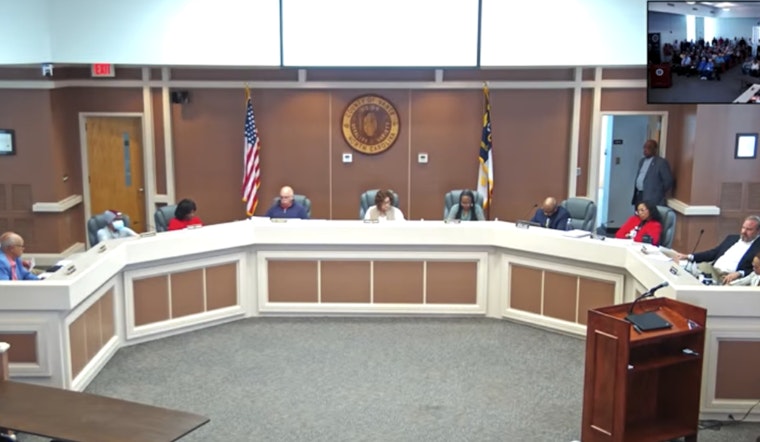
On Monday night in Vance County, a packed room of neighbors watched their worst‑case scenario edge closer to reality, as commissioners voted 6-1 to rezone roughly 113 acres along U.S. 158 Business. To many in the audience, the move felt like the opening chapter of a large industrial or data‑center campus taking shape across from their homes.
Dozens of residents showed up for a special‑called meeting to plead with the board, warning that the rezoning could overwhelm nearby neighborhoods, crowd local schools and stretch water supplies thin. As reported by WRAL, public comment went long and emotions ran high, with one woman telling commissioners, "you just sold out. I'm leaving. I'm leaving." The outlet also noted that, in the moment, commissioners did not spell out which members cast the yes and no votes in the 6-1 tally.
The rezoning request came from entities tied to Natelli Investments, a developer that has been circling big data‑center projects in the Triangle region. Natelli has not publicly confirmed any end user for the Vance County land.
Who Owns the Land, and Where Is It?
Local station WIZS reports that county records list the applicants as Michael Natelli and Beth Trahos, with Patricia Galloway named as the property owner. The special meeting, called on short notice, was streamed on the county’s YouTube channel.
Local research groups have mapped the rezoning area at about 113 acres spread across three parcels along U.S. 158 Business, positioned opposite the Carolina Pines neighborhood, according to Henderson‑Vance FYI. For nearby residents, that geography is not an abstraction; it is their front yard.
Developer’s Recent History
The name Natelli is already familiar to many North Carolina growth‑watchers. In March, Natelli Investments pulled the plug on a much larger New Hill data‑center proposal in Apex after a wave of community backlash, as reported by WUNC. That defeat has some Vance County residents worried their community is simply next in line.
So far, though, both county officials and the developer have been carefully noncommittal about exactly what might be built on the newly rezoned land. WRAL reports that Natelli has not confirmed the site would host a data center.
Neighbors Zero In on Water, Power and Daily Life
During public comment, speakers repeatedly pressed commissioners about water and electricity demand, clearly focused on the possibility of a heavy‑use industrial or data‑center operation. They pointed to research showing that modern data centers can require hundreds of thousands of gallons of water per day for evaporative cooling. The Lawrence Berkeley National Laboratory has documented sharp increases in data‑center energy and water consumption nationwide.
Local volunteers and watchdogs have warned that clustering industrial parcels along this stretch of U.S. 158 could add strain to the Kerr Lake regional water system, according to Henderson‑Vance FYI. Residents at the meeting folded those concerns into a broader worry about how a large new campus might affect traffic, property values and the character of long‑standing neighborhoods.
What the Vote Actually Does
For all the drama, Monday’s vote does not green‑light construction. The rezoning simply clears a major zoning hurdle, making it easier for a large project to move forward later. Any specific plan would still have to navigate additional approvals and public scrutiny.
Opponents are not waiting. A petition calling for a one‑year moratorium on new data‑center rezonings in the county is circulating online and is posted on Change.org. Organizers say they want time to study the potential impacts on water, power and local infrastructure before more rezonings land on the agenda.
Commissioners are scheduled to return for their regular meeting in early May, where residents say they plan to keep pressing their case; WIZS has posted scheduling details.
In the bigger picture, the clash in Vance County is another sign of how North Carolina’s appetite for economic development is colliding with communities wary of becoming the next industrial outpost. As county officials and any prospective developer move from zoning maps to real site plans, expect water, power and tax‑incentive questions to dominate the next round of fights.



